Showing posts with label future of retailing. Show all posts

Tuesday, July 21, 2015

Trends of Men's Fashion Week 2015

While the clothing at New York Men's Fashion Week was more conservative than that of London, Milan, or Paris's Fashion Weeks, it is clear it proved to be successful! Here are three of the major trends we saw that made Fashion Week stand out compared to the rest!

More Diversity on the Runway
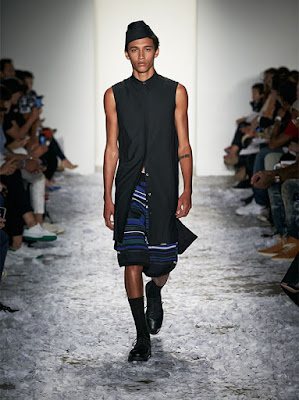
Compared to Runway shows of the past, this New York Men's Fashion Week had a more diverse group of models than ever before. Dao-Yi Chow and Maxwell Osborne, designers for Public School, made their show one of the most notable with their take on a tailored urban street style. Not only did the show incorporate different ethnic models, but it embraced those with tattoos and featured a few female models.


http://www.details.com/fashion-style/fashion-week/201409/public-school-spring-2015#/slide=12


http://www.details.com/fashion-style/fashion-week/201409/public-school-spring-2015#/slide=20


http://fashionista.com/2015/07/first-new-york-fashion-week-mens-observations


Ready to Wear Style
One of the trends that made this Fashion Week unique is the fact that many of the designers created looks that could be worn from the runway to the street. Each suit was tailored to perfection and leisure clothes looked like they would be seen on any stylish man walking down the street.
J. Lindeberg


En Noir
Todd Snyder

California Men
An overriding trend throughout each catwalk was a California laid back style. It seemed that many designers drifted that direction with their takes on athleisure and surf inspired style. Whether it be a workout shirt with a nice jacket thrown on top or the long surfer hair that was seen everywhere, the West could be felt in New York.
Garciavelez

Michael Bastian
N. Hoolywood

Friday, April 10, 2015

Downright Personal

Feb Cover Image


The results of personalization are undisputed — but what’s necessary to make it work?

First impressions can provide valuable information. But anyone who’s ever been in a relationship understands that really knowing someone takes time, experience — and often, a few steps forward and a few steps back to get it right.

This year, virtually every list of leading trends touts the importance of personalization. Truly knowing your customers, anticipating their needs, strengthening your brand: It would be easy to fall head-over-heels with vendor promises. Some are in-store efforts boosted by recent technology; others are aimed at e-commerce and mobile, providing just the right experience to just the right customer at just the right moment.

After beginning personalization efforts, New York-based Sabon saw a 35 percent increase in sales on Black Friday and Cyber Monday 2014. The luxury bath and beauty products retailer credits the results to a new relationship with Dynamic Yield, a provider of real-time, automated personalization and content optimization solutions.

Inna Uretsky, Sabon’s e-commerce and marketing coordinator, believes personalization is “crucial” in today’s retail marketplace. But it’s also essential, she says, that it works in real time.

Dynamic Yield created a layer on top of Sabon’s website content management system; pages can now be broken into distinct units that Sabon can directly update with various offers, including video and promotional content.

Because numerous variations can be used simultaneously, Sabon is able to try different messages based on automated algorithms. During the Black Friday weekend, optimizations were continuously generated, leading to increased conversions and sales.

“We were a little surprised,” admits Uretsky. “We were very happy with the results. With Dynamic Yield, we could make decisions in real time, and switch up copy and images right away.” Promotions remained relatively constant during that time period, but were presented in a half dozen different ways to individual customers.
 
Quick changes — especially those based on algorithms and not just “hunches” — can bring quick results.
 
Mobile Shopper

Opting in
Liad Agmon, Dynamic Yield CEO, says the company’s personalization solution works not only because it puts control in the hands of the retailer rather than the retailer’s developers, but also because customers as a whole are becoming increasingly impatient. Quick changes — especially those based on algorithms and not just “hunches” — can bring quick results.

The expectations are not just related to online. Ideally, what happens in the world of e-commerce impacts the store experience in a positive way. But some personalization solutions specifically target bricks-and-mortar.

Consider beacon technology, where an in-store device emits a radio frequency that can be recognized by an app on a customer’s mobile device. When that customer is close enough to the beacon, she can receive targeted messages and promotions.

Not long ago, there was concern that some shoppers would consider beacons an infringement of their privacy.

But “Since this technology does require an app, and the users have to download that app, and they have to opt in and have their Bluetooth turned on … the only shoppers who are getting these messages are the ones who raised their hands and said, ‘Yes, I’m open to this,’” says Rebecca Schuette, director of marketing for indoor mobile marketing company Swirl.

“Because of that, shoppers have been very happy to receive the content. We counsel our retailers to only share information that would be relevant and valuable to customers on their shopping journey.”

Many retailers are aware that beacons are hot technology and want to quickly get on board, Schuette says. But in some cases, they haven’t fully considered best-use case scenarios.

“The real magic happens when someone has thought it through, and asked, ‘What problem am I trying to solve?’” she says. “Am I trying to enhance the indoor shopping experience? Then maybe I place it in a certain department and offer up relevant content.

“If my intent is to increase conversion in the store, maybe I offer up messaging about a discount or deal that’s happening, which could then be redeemed at the cash register.”

In late 2014, Swirl released the results of a study of in-store campaign performance data and surveys of shoppers that had received recent beacon-triggered messages. The study showed that 60 percent of shoppers had opened and engaged with beacon-triggered content and 30 percent had redeemed beacon-triggered offers at the point of purchase.

In addition, 60 percent said they would buy more as a result of receiving beacon-triggered marketing messages; 61 percent said they’d visit a store with beacon marketing campaigns more often; and 73 percent said the content and offers increased their likelihood to purchase during the store visit.

Even so, Schuette says, beacon marketing is “still in its infancy.” The future beacon-enabled shopping experience will be able to couple a shopper’s location with the interaction he has had with the brand leading up to that point, including in-store experiences, mobile and e-commerce.

“When you can gather all of that together, then you can really drive personalized communication,” Schuette says.
 
Retailers should focus on gaining a clear and transparent view of inventory that’s as near real time as possible.

Visibility and technology
Future applications aside, some retailers are still challenged by what’s already available. Schuette’s advice? “Don’t wait. Consumers are ready for it. They’ve shown us that. But start small. And then be ready to scale quickly.”

Others take a more cautious view.

Kevin Sterneckert, chief marketing officer for OrderDynamics, is a former Gartner research vice president and lead retail analyst, past senior director of global product strategy at Oracle Retail and vice president of retail for DemandTec, and has held numerous retail management positions.

His perspective is that personalization can be “an incredibly expensive investment.” Retailers who jump on the bandwagon without having the correct infrastructure in place will only end up “advertising to their customers how messed up they are.”

If a customer is targeted with a specific product, loves it, wants to buy it and then discovers that there is no inventory or that it’s the wrong size or color, trust in the retailer quickly fades.

“Just like retail has always been, it’s all about the details,” he says. Rather than highlight the rising trend of personalization, he’s keeping a different list. First and foremost, Sterneckert says, retailers should focus on gaining a clear and transparent view of inventory that’s as near real-time as possible, have a true understanding of the return process and how it is impacting the business, reconcile their pricing strategies, and better grasp what their true costs are.

OrderDynamics works with retailers to create “seamless commerce.”

“We help retailers understand what to do given the conditions that exist,” Sterneckert says. “Instead of saying, ‘Here’s what’s happened,’ which most analytics companies can tell you, or ‘Here’s what might happen,’ something more predictive, we offer prescriptive analytics … . ‘Given what has happened, here’s what you need to do.’”

What retailers need to do, he believes, is get their houses in order.

Meanwhile, Oliver Jaeger, vice president of global marketing and communications for e-Spirit, isn’t advising retailers to wait when it comes to personalization. But he is suggesting they choose carefully.

“In order for retailers to delivery personalized content you have to have the right technology,” says Jaeger, whose company offers FirstSpirit, a web content management system that integrates with leading e-commerce systems as well as customer relationship management, search engine optimization tools and the like.

The biggest challenge in the area of personalization, he believes, is the ability to turn customer touchpoints into customer trust points.

“Make sure you are not stalking your customers,” he says. “Personalization is great if your customers accept it, and they will only accept it if they see value in it. If they feel you are invading their privacy with unwanted offers, you will turn them off to your products or services. Make sure you are providing them with valuable information at each touchpoint they have with you along their customer journey.”
 
Wood Hangers

Achieving authenticity
As we all know, trust is a necessary component of any relationship — be it customer and retailer or retailer and solution provider. So is planning for the future.

Robin Copland, vice president of retail for the Americas for software development pioneer ThoughtWorks, believes personalization efforts will only take a retailer so far; his company already is looking beyond it toward authenticity.

Efforts at personalization can still feel too broad; even beacons, he says, “are still mass market, to a certain extent.” With one client, the approach was to take what it already was known for — legendary customer service — and extend that experience online to create consistency and authenticity. Luxury apparel company Mitchells worked with ThoughtWorks to create a website that offers the ability to work directly with its style advisors just as if you were in a store.

Within the first two months, there were more than 1,000 back-and-forth communications with customers, creating a different kind of personalized service. Those communications move beyond product recommendations to help establish loyalty and brand ambassadors.

For anyone who’s been paying attention, however, the signs of current and future definitions of personalization have been there all along.

In 2007, PricewaterhouseCoopers and TNS Retail Forward envisioned the retail landscape of 2015. They forecast changing demographics, strategic outsourcing, targeted collaboration, retail outlets, a rising importance of technology and the critical need to keep customer purchase data safe and secure.

But “Retailing 2015: New Frontiers” also imagined a “new consumer,” one who would “not be easy for retailers to understand or master.”

“The value proposition guiding their product purchases is changing; consumers will put heightened emphasis on personalization, look for opportunities where their input matters, and value product and service solutions,” the report states. “Consumers are increasingly proactive in their purchase decisions and selective about with whom they want to do business.”

And, apparently, how they want to do it.

To view the original article please visit: https://nrf.com/news/downright-personal

Monday, February 16, 2015

A Look At The Retail Model Of The Future

By: Barbara Thau

Changing consumer shopping tastes and expectations are quietly transforming the retail industry.

Shoppers  increasingly crave instant gratification, one-of-a-kind merchandise and are cozying up to the idea of borrowing goods versus buying them.

As a result, the shopping model of the near future is poised to look radically different from just a decade ago, and retailers that don’t keep pace with changing tastes are setting themselves up for a rude awakening, at best, or extinction, according to Bashar Nejdawi, president of Ingram Micro Mobility, North America, a provider of technology and supply chain services.
For one, “In five years, consumer electronics stores as we know them today won’t even exist, and the same rings true for our favorite apparel brands,” he told Forbes.

“Technological innovations and a hyper-connected world have significantly influenced consumer behaviors and expectations. As a result, retailers are faced with a scary reality: change or become obsolete.”

Nejdawi detailed what he pinpoints as the three seminal consumer expectations fueling this shift in the retail landscape: instant gratification, borrowing and customization.

Instant Gratification
“Companies like Uber, Grub Hub, and Amazon have forever changed the way consumers think about service and how they go about their daily lives. They are no longer willing to wait for a taxi on the corner without knowing when it will arrive or trust the restaurant that promises delivery within 45 minutes. Instead, consumers want as much information at their fingertips as possible and as soon as possible.

“It’s becoming increasingly more common for retailers to rely on their supply chain partners to become the system of record for their inventory. Retailers will send their data to the third party logistics provider or link their POS [point-of-sale] system with them in order to provide an up-to-date, holistic view of what’s immediately available on store shelves, thus satisfying the consumer’s need for immediate access to information. As such, retailers must be able to deliver an intuitive experience in stores and online or they will lose customers’ loyalty.”

Borrowing
“What happened to the Boomers’ American dream of owning their first car or home? Today, we ‘Rent the Runway,’ ‘Zip car’ ourselves to and from the grocery store, and ‘Netflix NFLX +2.12%’ our shows. We want to own very little in order to consume more. Take the car for example: according to the AAA Foundation for Traffic Safety, cars purchased by 18 to 34 year olds fell almost 30% between 2007 and 2011.

“In the electronics space, we are seeing mobile device rental programs skyrocketing. Consumers ask themselves why they should pay $600 for the latest device when it’s going to become outdated within 12 to 18 months. Instead, they are opting to lease it for a minimal cost in order to get the next hottest gadget faster.

The borrowing culture begs the question: ‘How can retailers possibly handle the constant influx of product and get it in and out of consumers’ hands quickly enough?’”

Customization
 “In addition to wanting to know as much about products and services as possible and having the ability to quickly exchange an older model, consumers also want to ensure products are tailored to their individual lifestyles and preferences. For example, miAdidas allows consumers the ability to create their own shoes online with personal designs, pictures or logos. Retailers of the future will need to ensure that their supply chains are also evolved enough to handle the demand for custom orders.”

What Will The New Retail Model Look Like? Selling ‘Experiences’ Over Products
“Apparel retailers are light years ahead of the curve when it comes to who is more successfully building a new retail model that addresses these new consumer demands. But there is massive potential for consumer electronics retailers and other verticals to step up and meet the challenge. Imagine walking into your local Best Buy BBY -0.2% and seeing winter jackets on the show floor. In today’s retail climate this might look out of place, but the electronics retail store of the future will also sell smart apparel — picture a winter coat with a built-in smart watch.

“Additionally, stores of the future will emphasize selling experiences and lifestyles over products. Think about how revolutionary it was when Fleet Feet Sports allowed consumers to run down the street in a pair of shoes to experience the fit and feel. Now apply that idea and kick it up a notch: picture visiting a consumer electronics store to solve your health and fitness needs. Sales representatives can outfit you with a fitness tracker that reads your oxygen levels and heart rate to test your performance and wellness on an in-store obstacle course. Although consumers are testing out the product, they are also getting a glimpse into what their experience would be with that product in their day-to-day lives.

“Another great example of the retail model of the future is to provide value-added services attached to a product. For example, if a consumer is buying a new phone then the retailer should automatically offer in-store classes to train the consumer on the device.”


To see the original article please visit: http://www.forbes.com/sites/barbarathau/2015/02/10/a-look-at-the-retail-model-of-the-future/

Wednesday, July 11, 2012

What Retailers Are Saying About the Future of Retailing?

"Retailers appear to understand the need to customize the in-store experience to appeal to the modern shopper, yet a high proportion are unable to do so. Three-quarters of retailers said they don’t know when a specific customer is in the store, and 85% cannot customize a store visit. Additionally, 89% are unable to connect customers’ activities online with what they do in the store today."

The retail industry is on the fast track technologically. Media Post and Motorola Solutions have published some very interesting statistics on what retailers are projecting for the future of retailing and retail technology. The full article will very much be of interest to retailers.

As you note in the above chart, evolving the in store experience for customers is viewed as "critical" and will advance greatly in a vast majority of retail stores over the next 5 years. Engagement comes in several forms; requiring customer contact capture, a comprehensive CRM, OMNI channel and much more. You may wonder what exactly that will mean and how you can maintain your brands personality and evolve without breaking the bank, there are few systems that can support the needs that retailers will be facing in just 5 years and we are more than proud to have a variety of options to suit retailers of all kinds.

One Step Retail Solutions is currently working with dozens of retailers across the US to create customized and all-inclusive retail management systems that will take them into the future. Our systems are top of the line, highly regarded within the industry and our consultative approach will ensure all of your personalized needs are not only met but surpassed.

We wish you all of the best in the exciting years to come and hope that we can be of assistance in making your dreams come true.

Tuesday, June 12, 2012

[Video] The Future of Retailing with Retail Pro

On June 5th at 11am we held a one hour discussion regarding the future of retailing with Retail Pro. Speakers included Retail Pro representative Ket Venethongkham, FlexQuery's Jeff Whiteside and Scott Anderson of Foundry Logic.

These top retail technology professionals shed light on the future of retailing and answered questions through the session and in a Q&A session at the end of the discussion.


We will be following up this popular discussion with a series follow-up discussions over the next month.

Tuesday, June 19th, 11 am PDT, Retail Pro Prism Live Demonstration Register

Tuesday, June 26th, 11 am PDT, Retail Pro Mobile POS Live Demonstration Register

Tuesday, July 10th, 11 am PDT, One Step Retail Analytics Live Demonstration Register

For a free Retail Pro consultation and demo, click here.

Sunday, June 10, 2012

The Future of Retailing with Retail Pro - Web Series


One Step Retail Solutions presents:

The Future of Retailing with Retail Pro - Prism Demonstration

Coming soon to your Retail Pro POS System: Retail Pro Prism. Prism will change your retail operations in beautiful and efficient ways that will cost less and decrease your long-term investment in your store automation.

Join us and Ket Venethongkham from Retail Pro International as he shows how to brand your POS to match your store, how to set up workflows and how simple and intuitive your point of sale can be.


Recorded Live: Tuesday, June 19th, 2013

The Future of Retailing with Retail Pro: Mobile POS

Mobile POS will change the way you do business in your store, how you interact with customers and how they interact with you and your employees.
See a full demonstration of how Mobile POS can work on your iPhone, your iPod or your iPad and integrate with your existing Retail Pro POS system.
Join us and  Scott Anderson from FoundryLogic as he shows us how to bring Mobile point of sale to your store.

Recorded Live: Tuesday, June 26th, 2012


The Future of Retailing with Retail Pro: One Step Retail Analytics


One Step Retail Analytics will give you all the reporting you ever wanted to have in your store and more!

Powered by FlexQuery, Analytics will open up a world of possibilities for you to manage in way you never could before.

See a live demonstration by developer Jeff Whiteside as he shows how you can utilize all the valuable information stored in your Retail Pro point of sale system and turn it into actionable information that is easy to understand and will increase your bottom line.


Recorded Live: Tuesday, July 10th, 2012

VIEW NOW