Showing posts with label retail marketing. Show all posts

Sunday, October 25, 2015

3 Sales Development Tips for Improved Messaging

By Michaela Cheevers


Throughout the creation of our guide The Sales Development Messaging Toolkit we took a hard look at the sales development function and the type of email, voicemail, and social selling strategies that are necessary to succeed in sales. With over 14 years of experience managing teams of SDRs for various clients, we have found the best strategies to write emails, voicemails, and social messages. However, finding the “easy” method of scripting these just doesn’t cut it anymore. There is a unique formula that requires a combination of skill and technology to ensure your SDRs are engaging with prospects and maximizing their efforts. The following is a redactment from our guide.
To get your SDRs started on the path to improving their messaging strategies, here are a few of our top sales development tips:

Watch Your Tone in Email Messaging

You may need to coach your reps, especially those who ar
e new to the business world, to maintain a professional tone in their emails. Our CEO and Co-Founder, Peter Gracey, went into great detail about the current trend in today’s sales development emails. If your SDRs have spoken with their prospect in the past and established a rapport with them, they can generally be more casual in their correspondence, but otherwise, it’s best to err on the polite side. Ensure that your reps are performing a routine spelling and grammar check. Also, make sure your reps avoid asking too many questions in introductory emails, as prospects will immediately recognize this sales tactic and will most likely pass over the email; instead, they should provide statements about their product or service’s effectiveness and ask when a good time is to speak with them.


Don’t Be Redundant in Voicemails


Don’t waste precious seconds on redundancy, as time is extremely valuable when leaving a voicemail. Also, avoid sentences like, “We are experts in the field of…,” or “We’re the world leaders in…” Your reps will come off as conceited, and nobody wants to hear jargon. Try to be more human. Using phrases such as “When we last spoke…” or “When we discussed this a few months ago…,” will personalize your conversation, and your prospect will be more willing to re-engage.


Take Advantage of Social Media


Unfortunately, only 5% of B2B sales teams consider social media a successful lead generation method (Ken Krogue). However, reps who use social selling are 50% more likely to meet or exceed their sales quota (Liz Gelb-O’Connor). In fact, 72.6% of salespeople using social selling as part of their sales process outperformed their sales peers and exceeded quota 23% more often (Aberdeen). The first message that your rep sends out to a potential prospect should be informative and not openly salesy. When you’re getting to know someone on social media, it’s good to incorporate social listening as well. Does the prospect publish on LinkedIn? What kinds of tweets do they post?


To view original article: http://ow.ly/TMvoo

Friday, October 16, 2015

Embracing “Showrooming”

By Jon Bird

Over the last few years, “showrooming” has received a bad rap. This is the practice where a smartphone-enabled shopper goes into a physical store to touch and feel the merchandise, gets expert advice, and then compares prices on their device and purchases online elsewhere. The classic example is of a customer visiting a Barnes & Noble bookstore, checking out the latest novel by Stephen King, asking the associate for his opinion, and then buying on Amazon.
A new generation of retailers and brand-owners, however, has embraced the showrooming concept and taken it to a whole new level. On a recent retail expedition in and around New York’s SoHo shopping district, I saw numerous examples, and four caught my eye:


Samsung Galaxy Studio – a warehouse-style space filled with the latest Samsung devices, and not a single one for sale. The idea is for shoppers to play with the product and they get rewarded for doing so. Customers collect points for stopping at each “experience station”, and receive free merchandise as prizes at the end. Highlights include a Design Studio, where you can create your own t-shirt with the help of a Samsung Galaxy Tab, and a café where you can order a complimentary cappuccino and pastry via a Samsung device.


The Sound of Porsche – new brands like automotive darling Tesla have stolen some of Porsche’s cool, and this pop-up in the Meatpacking District (now closed) was part of an attempt to get it back. The temporary installation was dedicated to selling the sound of the iconic brand. Set up like a vinyl record store, customers could listen to classic car soundtracks, and in the Sound Studio hear the distinctive thrum of the engine and project accompanying visuals onto the surface of a 9-11.


Story “Tech & Style” with Intel – Story is a “retail space that has the point of view of a magazine, changes like a gallery, and sells things like a store.” Every 6-8 weeks, the entire story of the store changes – every fixture, every fitting, and every product. Right now the featured “story” is a collaborative effort with Intel, showcasing tech both “on the outside” (e.g. gadgets) and “on the inside” (e.g. embedded in clothing). Wearable technology is a key story, like “Ringly”; jeweled rings that can be paired with your smartphone to vibrate and ring when a message is received.


Chobani SoHoan artfully designed café showcasing Chobani’s signature category-creating Greek yogurt in both savory and sweet “creations”, along with coffee and sandwiches. It’s as much about the philosophy and aesthetic of Chobani as it is about the yogurt itself.

In each of these cases, the stores are unashamed showrooms, allowing shoppers to interact with and experience the brands on a deep and meaningful level, then (hopefully) spread the word via social media. It’s about buying into the brand, not necessarily purchasing from that outlet.

In regular retail too, forward-thinking merchants are happy to treat their stores as showrooms. Apple led the way. From when the very first Apple Store opened in 2001, the retail space was a glistening showroom of all things Apple, where customers were encouraged to play with no pressure to purchase. (Of course, it helped that Apple is famously rigid with pricing no matter the vendor, and that they own the brand.) UK department store John Lewis has also significantly built its business on being agnostic about where the sale ends up – in store or online. They are more than happy for shoppers to be inspired in store and then buy on their devices. Do a good enough job in the store, and the shopper will stick with John Lewis.

For a while, a year or two ago, retailers were penalizing shoppers for treating their stores as showrooms. There was the case in Sydney Australia of a ski shop charging customers to try on boots, then refunding if a purchase was made. Wrong move. You can’t fight the Internet and you can’t bite the hand that feeds you. Instead, it’s time to reinvent retail and embrace showrooming.

To View the Original Article: http://www.newretailblog.com/embracing-%e2%80%9cshowrooming%e2%80%9d/

Wednesday, March 11, 2015

Impulse Shopping Never Gets Old

Posted By Bradley Daves
 
Impulse buying
Those dang Millennials, with their selfies and their Instagrams and their Vines.  Completely self-involved.  My generation was never like that – too “smart” to work a boring job or be taken in by advertising.    

That argument is getting tired; it has a definite “you kids stay off my lawn” vibe.  More importantly, it’s not true.  Sure, Millennials are narcissistic and self-absorbed.  So was everyone at that age.  (Heck, the Boomers celebrated “The Me Decade.”)  It’s called being young, feeling full of yourself and thinking you know more than everyone else.

That same Millennial is probably also tech-savvy, globally aware, socially conscious, collaborative and altruistic.  Clearly a better person than I am.

Except when it comes to that candy display at the cash register.  It’s true, Millennials, you’re just as impulsive as anyone else.

Impulse buying knows no generation boundaries.  She is an equal opportunity temptress.  A 2014 Gallup study showed that 42% of US millennials had made an impulse purchase in the past four weeks. Forty percent of GenX respondents and 39% of the Baby Boomers reported the same.   
Because impulse buying is not a generational thing.  It’s a human behavior thing, tapping into two primal human motivations: avoiding pain and experiencing pleasure.

It is also a profitable thing, especially with brick-and-mortar retailers.  Research by A.T. Kearney indicates that 40% of consumers spend more money than they had planned in stores, while only 25% reported online impulse shopping.

So how can a retail marketer entice the shopper (of any generation) into an impulse purchase?

Choose the right products.

Shoppers love to be surprised.  Delight them with something cunning or cute.  Provide solutions to little problems; anticipate what they might need.  Display items in logical usage or occasion groups.  Be thematic and dramatic; curate items in a lifestyle context.

Think seasonal.  Think special occasion.  Think gift (maybe for herself).  And price it right so as not to exceed the shopper’s comfort threshold.

Put them in the right place.

The classic spot for impulse items is at the front of the store, leading to or at the register.  It makes sense.  When the shopper moves to the registers to pay, she has already made some selections.  She’s primed and in the buying mood.  So rather than a dreary, shuffling line, give her a mini gallery of “hey, I didn’t think of that” items.  (Sephora and Old Navy do a particularly great job with this.)

But what if there isn’t a cash register?  What if sales associates use handheld devices to complete shopper transactions?  Entirely possible, and becoming more likely each day.  Shopper marketers must move impulse items from the front of the store and into the aisles.  They should break up symmetrical, orderly departments with unexpected collections of “I didn’t know I needed this until I saw it” merchandise.  Strategically placed sales tables, POP units, custom shelving, displays and more will add excitement to the aisle and help the shopper give in to her impulses.

Promote them well.

It is critical to quickly and clearly help the shopper see (and feel) the monetary and emotional value of an impulse item.  Smart signage does that by anticipating and answering her questions.  Signs will tell the shopper what she’s buying, why she must have it, and why she should give in and get it now.  It is important that she gets the answers she needs in the moment; the stakes aren’t quite high enough for her to seek out an associate.

Clear, attention-grabbing signage will also communicate the urgency or exclusivity of promotions.  Special deals, limited time offers, VIP discounts and bundled items will engage the shopper and help her justify her impulse purchase.


To view the original article please visit: http://www.medallionretail.com/blog-post/impulse-shopping-never-gets-old

Friday, February 20, 2015

Five Ways Fashion Brands Can Succeed at Instagram

By: Macala Wright
Monday, December 29 2014
 
 
It’s the old adage that we’ve all heard before: a picture is worth a thousand words.

What if that picture was on Instagram featuring a fabulous model flaunting a Michael Kors handbag? For fashion brands, that picture could be worth thousands of dollars in revenue. Over the last three and a half years, a dramatic shift has taken place in the e-commerce landscape. The rise of visual social networks has allowed consumers to naturally interact with products, thus creating a new wave of influence and revenue opportunities for brands and retailers on Instagram.


Do you think you can afford to discard Instagram from your overall marketing strategy? Think again. Here are the picture-perfect facts:
  • According to Piqora, Instagram now has  200M members and an engagement rate that is 25% higher than any other social platform.
  • Instagram users spend an average of 3.7 hours on the app every month. When it comes to fashion, an L2 research study revealed that Instagram users spend an average of 257 minutes on the platform each month. That is over two days per year!
  • That same study also showed that Instagram ads helped retailers increase ad recall by 32% and brand message lifts by 10%.
  • Millennials trust user-generated content 50% more than other media, according to Mashable.
  • eMarketer’s latest forecast predicts that by the end of 2014, almost 25% of US smart phone users will upload a photo to Instagram on a monthly basis.

Inspire Your Customers
Piqora wrote, “Instagram is a platform to build emotional bonds – an opportunity for brands to show their values, personalities, passions and ethos.”  For footwear brands, Instagram is the perfect platform for your brand to show (and not tell), which is why several companies inspire their customers every day on the rapidly growing photo-sharing platform.

Nike is the perfect example of a brand that sets the bar for Instagram inspiration. Nike will feature several beautiful photos of an athlete overcoming a huge hurdle or accomplishing a great feat with the hashtag #justdoit. When brands inspire, customers engage – and they are showing it with dollars! Social collaborations may also be a great way to inspire fans while humanizing your brand by leveraging the power of influencers.

Humanize Your Brand
Customers want to know more about your brand – beyond the latest product launch. It is about the connection. Customers are curious about the people behind the designs, your company values and role in the community. If your company is Made in America, upload a behind-the-scenes photo of where your products are crafted. If your designer has an incredible story, upload a picture of your designer creating sketches. Giving your customers visual context through Instagram allows them to connect to your brand on a much deeper level.

Humanizing your brand relates to engaging your audience. This summer, Marc by Marc Jacobs turned model casting calls into a social media contest on Instagram. The #CastMeMarc campaign asked users to take pictures and tag them #CastMeMarc. The week-long contest received nearly 70,000 submissions. Nine lucky winners appeared in the Marc by Marc Jacobs fall campaign, which launched in August of 2014.  70,000 submissions resulted in millions of social impressions, PR coverage, and most of all, visual fan engagement through “hearts” and comments.

Enable Widgets + Virtual Styling

Engaging your customers with unique website widgets has the potential to drive consumer sales and increase your site’s conversion rate. Brands like Steve Madden, Puma, Cole Haan, Brooks and Sperry Top Sider found incredible success with Olapic, a tool that helps increase sales by pulling consumer photos from Instagram (usually via hashtag) into the e-commerce experience where it is featured with the product for sale. When consumers engage with these types of widgets, the conversion rate is much higher compared to consumers who do not engage with these widgets. According to Olapic’s research, 9.6% of visitors who interact with customer photos convert. This technology allows brands to become content curators of the most authentic asset available to their brand: user-generated content.

Often women have a hard time styling an outfit, how many times have you asked a friend if something looked good? Using social recommendation behavior, footwear retailer Zappos created Glance, and developed a creative way to shop Instagram with #nextOOTD. With it, Instagram users shoot an outfit and tag it with #nextOOTD. Anyone who does this will recieve personalized shopping recommendations based on their Instagram history and style.

Create a Virtual Storefront

If you’re a smaller brand or retailer without an established e-commerce site, start with Instagram. Snap and upload pictures of your products and include product descriptions in the photo caption. Then, you can finalize sales with tools like PayPal. Opening your storefront on Instagram is a fun, easy and cost effective way to provide visually rich content that increases consumer purchase intent. While Instagram does not yet allow clickable external links, that does not stop retailers from leveraging the power of this application. A creative tip from smaller retailers is to create a check-in location for your store or company with the purchase URL in the description.


Establish Platform Goals and Metrics

Due to its visual nature, Instagram audiences for brands hold the highest engagement rates (4.21%) of all social media platforms, including Twitter (.03%) and Facebook (.07%). So in essence, Instagram is your brand’s story in pictures and video. It is as diverse and dynamic as you want it to be. As you tell your story, you need to set concrete goals to measure and benchmark your marketing efforts against.
●If you want to build brand awareness, look at the type of content your users are interacting with the most.
●If you want to drive sales traffic, look at how you are optimizing pictures for that.  For instance, are Soldsie, Keep or Like2Buy part of your strategy?
By following the above steps, you will be able to put Instagram to work for you in order to drive brand success.

More Tools For Success

There are numerous free, cost effective solutions to help any marketer develop their Instragram marketing strategies. Piqoura offers an online webinar and a marketing guide for all fashion brands. If you want to find brands to follow and receive inspiration from, check out Totems. Simply Measured also offer free Instagram assessment tools and blog posts on how to be competitive with your visual content.
Do you have resources for Instagram marketing success? Share them with us @FNPlatform on Twitter or Instagram!

To view the original article please visit: http://magicblog.magiconline.com/content/five-ways-fashion-brands-can-succeed-instagram

Friday, June 20, 2014

Marketing for Manly Men

Marketing for Manly Men


More and more men are browsing and buying for themselves than ever before. It’s an undeniable fact of life. With the rise of the “metrosexual”—men who are concerned about good grooming and pulled-together appearances—and the expansion of the Web, men are a growing force to be reckoned with in terms of commerce and consumer spending.

In June, fathers get their big celebration, but men are actually a potential target audience year-round. Smart retailers can make their shops an inviting place for male customers. True, women are still more likely to go shopping as a form of entertainment or “retail therapy,” but men are growing more apt to pick out their own clothing, accessories, jewelry, and home décor. It takes a real man to deck out a “man cave” with just the right amount of neon and leather.

Why is there an uptick in testosterone traffic? Chalk it up to the postponing of marriage to later years, the prevalence of divorced couples, and women being employed full-time and not available to run their husbands’ errands. All of this adds up to men becoming an increasingly more common sight as consumers.
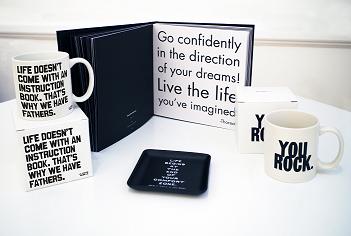
quotable group (1)

How can you catch these male customers?
Use Signage. Men don’t like to ask for directions, and that holds true in a shopping situation as well. If you have promo material provided by a company, or signs that you can create yourself, men will read the details and make their decisions on their own. When it comes to what they want to buy, most men are like John Wayne: the strong, silent type. They’ll mull it over independently and then make their choice.

Allow Hands-on Play. Electronic stores, like Best Buy or the Apple Store, have large male patronage because men like to take the items for a “test drive.” Gift shops and home goods stores that sell china and stemware report that men will seek out barware: they will look to find ice tongs, cocktail shakers, shot glasses, and other bar items that they can hold in their hands and connect with.

Books Are Big. One of the most successful male-centric Internet sites is Amazon. Men like to read, and they like to read about what they plan to read! Men will read instructional manuals and follow printed directions. They won’t just “wing it.” If you have books or magazines that are reflective of your inventory, you can create a display that features both and will get men to stop by to explore. For instance, if you have cuff links and martini glasses at your shop, why not team them up with James Bond thrillers or some other espionage hero? Men will gravitate to the recognizable super spy and then see the merchandise that mirrors these macho men. If you sell beer recipe books or barbecue tips, couple them with inventory that keys into those categories as well.
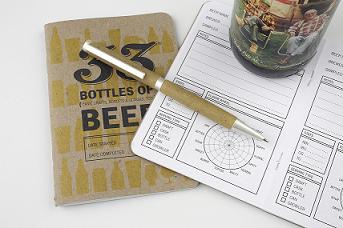
MM beer and journal

Impulse Purchases Are King. If you have items that you think are potentially big sellers for men, consider keeping a supply of them up front by the counter and cash register. While many men will come to a store looking for one or two specific things, they are highly susceptible to what they see while they are on line waiting to make their purchase. Well-placed products with a male slant—which they can pick up and consider while they are being rung up—will often result in a sale.

E-Mail Matters. If you have an e-mail list of your store’s customers, send out an invite for the guys. Host a special day or days for the gents only. Make it a “Casino Shopping Spree.” Keep a deck of cards up by the register. The card that they pull from the deck can be their dollar saving or their percentage off their final purchases. (Number cards can be their face value; you decide how you want to handle picture cards.) However you want to run it, the chance to save money is always appealing.

Why Generation Y? Younger men—guys 34 and under—are a different breed of shoppers. They are being raised in a world that didn’t focus on gender distinctions or differences between the sexes. These younger men are much more like the “traditional” woman shopper. They will engage with sales staff and will just go to a mall to hang out. Be on the lookout in magazines, TV shows, movies, and in your neighborhood for merchandise that would entice this bracket of younger shoppers.
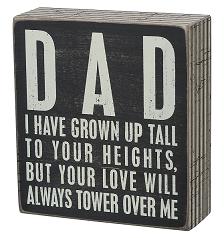
dadPBK

Data About Dad’s Day       
Even though Father’s Day was first commemorated in the United States in 1910, it didn’t receive an official presidential proclamation until 1966, courtesy of Lyndon Johnson. His edict declared the third Sunday in June to be set aside for honoring the fathers of America. In1972,more than 60 years after the first celebration was held in Spokane, Washington, Richard Nixon signed the federal law that made it a permanent fixture on the American calendar.

Even though dads were strongly venerated in popular culture—think Robert Young in Father Knows Best or the Ward Cleaver character in Leave It to Beaver—the full-fledged celebration of a special “dad day” didn’t really gain momentum until the 1980s. Prior to that, a father seemed to be simply content with a chance to read his Sunday paper for an extra hour in peace and quiet and maybe to savor a second helping of bacon and eggs as a Father’s Day treat. It took TV’s Bill Cosby and his preference for high-end multicolored sweaters to show that dads wanted to buy goods and look good.
Nowadays, the opportunity to honor dad with gifts and greetings is a part of the cultural landscape. Interestingly, with single-parent households becoming more and more of the norm, Father’s Day celebrations have expanded to include male mentors. Grandfathers, uncles, cousins, teachers, and coaches are very often the recipient of Father’s Day cards and presents. It’s a new way to honor a century-old innovation.

Father’s Day is the fourth-largest card-giving holiday in the United States. There are roughly 67 million fathers in America, and nearly 100 million cards were bought and sent in 2013 for this holiday. Fifty percent of the cards that were sent were from sons and daughters to their dads; 35% were for “someone special” in a person’s life (meaning male relatives and mentors), and 15% were wives buying for their spouses. Eighty percent of Americans acknowledge the holiday through the exchanging of cards, gifts, celebrations, and get-togethers.

To view the original article please visit: Smart Retailer

Friday, September 13, 2013

Retail Store Management: Secrets of Success


SECRETS FOR SUCCESS IN THE
MANAGEMENT OF RETAIL STORES

Among the reasons why many retail stores are facing ever increasing challenges today is  rapidly changing consumer buying practices, a very dynamic and evolving marketplace and often the “fundamentals” of running a retail business get overlooked.

Industry analysts find there are specific management initiatives that are vital to success in retailing, which includes all types of stores.  Some are obvious, and some are not so obvious.  When one has a firm grip on these techniques, chances for success are greatly improved.

It may be that only one or two of the areas need your immediate attention, but putting these challenges high on your list of priorities can mean many dollars of increased cash flow back to the institution!

EXPENSE MANAGEMENT.  This is frequently a major area of concern.  One should know precisely what the expense allocations should be for each line of your operating expense report.  Operating expenses must be planned, not left to chance.  Expenses must be viewed as a percentage of total sales so as the business “ebbs and flows”, you are still in line with margins goals. A monthly expense spending review of all expenditures is vital and should be administered with a disciplined hand.  Compare actual expenses against planned expenses.  A review every three months can be risky, every six months can be dangerous and once a year can be terminal.

MERCHANDISE PLANNING MANAGEMENT.  The development of a sound merchandise planning and open-to-buy program is crucial to the profitability of any retail operation.  Forecasting and planning must be based on a sound evaluation of current and forecasted sales and inventory figures.  In your merchandise planning program, the development of trends by type and end-use of merchandise is essential.  This is known as classification merchandising.  Growth must not only be planned but must be planned in a manner that will insure profitable growth.  The economy can go down as well as up.  One must be prepared to use brakes as well as power.  Willy-nilly budgeting today for a 5% to 10% increase is not viable in today’s business environment.  Planning and buying merchandise in the right amounts, at the right time and in the right selections is key.  Proper timing of deliveries is essential for control of cash flow and to maximize revenues.

INVENTORY MANAGEMENT.  Managing inventories to yield their highest earning potential is a serious undertaking.  It is essential to continually measure the life cycle of merchandise and to make sound judgments as to whether each item of merchandise is an asset or a liability.  Keeping a handle on the weight of the inventory with regard to vendors, styles, colors, sizes and balanced selections is all important.

Many retailers have been known to have an unacceptably high percentage of their existing inventory in stock for over 180 days.  In that scenario, all that could be achieved is a two time inventory turn, at best.  This old merchandise is most likely out of season.  How much in earnings will be lost on these old goods? Even if the merchandise can be charged back to the vendor, there are the operational and freight costs to consider.

Our inventories are one of the most important assets we have as retailers.  Respect and treat inventories like real dollars because that is what they are.  Inventories that are aged beyond a normal selling period and carried forward steal from net earnings.

MARKDOWN MANAGEMENT.  Timely and well managed markdowns are a necessary part of any retailers profit strategies. There are situations were some markdowns are healthy but excessive markdown can bleed off additional contribution dollars.  It isn’t what sold that counts, but also what hasn’t sold.  Every slow selling or non selling items is a drag on earning potential.  What is an acceptable markdown as a percent of sales?  The saleability of inventories must be evaluated on a regular basis.

Excessive markdowns are a result of little or no planning, overbuying and poor inventory management. 

VISUAL MERCHANDISING MANAGEMENT.  Visual merchandising is the “silent salesperson” in any retail operation.  It is the presentation of properly displayed merchandise, well planned advertising and good housekeeping that portrays store image.  First impressions are important. They influence the customer’s conscious and subconscious decision-making process.  This merchandising technique is essential to attract new business and ensure repeat business.  The effective use of color, design and quality projects the store’s attitude and image.  The object of visual merchandising is to be pleasing to the eye and to suggest satisfaction of customers’ need or wants.

CUSTOMER SERVICE MANAGEMENT.  Thousands or even millions of dollars invested in retail inventory isn’t an uncommon occurrence for both “brick and  mortar” and e-commerce businesses.  It has been observed that without the support of a well trained, enthusiastic sales staff and an effective customer service philosophy the earning potential of a retail operation may very well be hindered.  It is critical for management to develop training programs for their employees.  Training is not a one-shot type of program.  It should be an effective ongoing program with specific objectives to reinforce employee development and company philosophy. The goal is too always improve the customer’s shopping experience and exceed their expectations.

Customers are the most important people ever, either in person or on-line.  They are not dependent on us; we are dependent on them.  We are not doing them a favor by serving them, rather they are doing us a favor by giving us an opportunity to do so.  Arguments are never won with customers. It is twice as hard to get dis-satisfied customers back into your store and often that customer will tell others, making your loss even greater. Develop strategies to attract and retain new customers as there is always attrition in your customer base even with the best customer programs in place. Customers are individuals who bring us their needs and wants.  It’s our job to satisfy those needs and wants by providing value and uncompromising service.

CUSTOMER ANALYSIS MANAGEMENT.  Customer turnover is an inherent part of any retailer’s business.  Customers can move away or leave for many other reasons. For effective customer analysis management we must discover and implement the answers to the following questions:  How do we build our customer base and loyalty recognizing that the customers are constantly changing?  What competitors have enticed our customers away and why?  How do we retrieve customers?  Periodically review your customer’s expectations to see if it has changed and you have not! You may have to change in order to attract the potential customers now represented in your community.  The majority of customers spend their money differently now than they did 5 or 10 years ago.  And this could change again in a few years!

MARKETING. Customer’s buying patterns having been changing rapidly over the last few years. “Consumers don’t think in terms of channels, they simply shop – in stores, online, on their mobile phones, etc. Retailers on the other hand are organized and optimized for channel-efficiency. Over the past decade stores have borne the brunt of this buyer-seller disconnect, a trend only accentuated by the value-consciousness of shoppers following the worst economic recession of our times”.
In the five-year period from January 2008 to January 2013, retail store sales have grown 8.5% (quoted from recent report by EKN Research).  ECommerce sales over the same timeframe have grown 72%. Within this time, the world order of retail has changed. Con­sumers have discovered the power of smartphones, utility-like high-speed Internet connectivity, the power of social media, and tools and services that deliver instant access to product pricing, inventory and reviews.

According to a recent article from EKN Research, Division of Edgell Communications,
“Retailers need to re-organize their strategy, people, processes and technology to:
                        Re-imagine stores as a hub for delivering Omni-channel experiences
                        Re-vitalize stores to deliver unique, beneficial experiences
                        Weave in familiar digital experiences into the physical fabric of the store
                        Combine human intuition with deep consumer insight to develop truly personal relationships with customers.”

Retail/ECommerce businesses must embrace this new technology and use it to their advantage in improving customer retention and attracting new customers. This does not mean that we have to abandon old marketing strategies but re-think them in terms of today’s contact points with customers.

CONTRIBUTION MANAGEMENT.  Contribution management is defined as the amount of profit dollars generated from a retail store. If we reflect over the past several years, retailing hasn’t become any easier.  The fatality rate of all businesses that have operated without sound management techniques has been escalating.  With stores it is all about remaining viable and to avoid becoming a “dinosaur” in the new world order of consumerism. With ECommerce it is not just all about “improving the number of clicks” to your website but how long do they stay, do they come back and do they buy? The rewards for hard work with sound planning are still attainable. 

Contribution Management should be the first consideration, not the last.  If it is last, one can only hope that some profit will be generated by year’s end.  This situation would be similar to an airline pilot starting to fly east to New York without a flight plan.  Such a pilot does, however, have a flight plan.  It is constantly being monitored by his navigator to be sure they remain on course.  When deviations are noticed, corrections are made to get back on course so that the destination chosen will be reached safely.  Sound profit management uses the same principles.  A reasonable profit goal must first be set.  This goal then must be systematically tested to determine whether or not the profit goal is feasible.  Some of the test questions would be: What are the anticipated fixed and variable operating expenses as they relate to annual sales volume?  What is the anticipated markdown percentage as a percent of annual sales?  Is the average initial markup reasonable enough to meet these considerations and remain competitive? What are the inventory turn goals and are they achievable?  And lastly, are the merchandising techniques and tools in place to monitor all segments of the operation on a timely basis?  If the answers to these questions are positive in nature then contributions can be improved much like the airline pilot’s flight plan to New York.

SELF-CONTROL MANAGEMENT.  This management technique may be the most important of all and too often the least applied.  Most successful merchants operate and run their businesses with their heads and not their hearts.

Goal setting is the starting point.  Realistic and attainable goals must be set for all areas of the operation.  To reach these goals and to be a successful retailer, one must be dedicated to the successful implementation of all of the techniques we have discussed here.

Intuitive decisions based on a flare for merchandising are key to building a leading retail store.  At the same time, “Self-Control Management” means that one is willing to exercise good judgment in the decision-making process.  Don’t wildly buy merchandise based only on hopes and dreams of how much you can sell while totally ignoring the plans you so carefully developed!


RMSA is a merchandise planning and cash management company that has been assisting retailers improve their profit performance for over 50 years. RMSA is not just about OTB, but reviews any aspect of the business that impacts financial performance. RMSA continues to speak at industry seminars, workshops and webinars sponsored by a variety of organizations. RMSA has been working with thousands of retailers in the United States, Canada and South America for over 50 years and has established a reputation for optimizing performance and delivering the expected financial goals for our many retail clients.

These clients would be glad to share their stories . . . just let us know.

Dave Downard
Senior Merchandising Analyst & Consultant
626-705-3724 Cell

Friday, March 1, 2013

How Did You Hear About Us?

You have undoubtedly heard that question a multitude of times. "How did you hear about us?" is one of the most important questions a retailer can ask at point of sale and can lead to thousands upon thousands of future sales.
 
Your retail management software should support your marketing efforts in every way possible and include a feature for tracking and analyzing where customers have come in from; word of mouth, newspaper ads, mailers, Yelp, a blogger, etc. 

If your Point of Sale or Retail Management System is not EMPOWERING you as a retailer, give us a call at 800-266-1328


One Step Retail Solutions has helped thousands of retailers nationwide achieve their retail goals through top of the line retail technology. With a consultative and personal approach, One Step is a top resource for 5 of the top point of sale / retail management systems available on the market. Having been in business for over 27 years we have evolved relationships with specialists industry-wide and strive to bring educational resources to our retailers and other retail friends.

Tuesday, January 15, 2013

[Guest Blog] Benefits of Custom Displays

Custom design merchandiser display for cosmetics. All acrylic.I was talking with my sister on the phone the other day, when she interrupted me from her excitement over her recent impulse buy of black, glitter nail polish. She had gone to the store for some soda, when she explained that she saw this new nail polish sign. She’s not terribly familiar with all of the display marketing lingo. Anyway, after some probing, I found out that she was attracted to this new color of polish because of the display.
Custom displays help by providing that “wow” factor. Visuals convey the power of ideas in a way that words alone cannot. The personality of a retail store is not determined by merchandise alone. Custom displays provide the following benefits when properly designed and deployed.
Consider this. Coke, the NFL, MAC Cosmetics, Bank of America and Proctor & Gamble - just to name a few - are all very familiar with the above benefits and continue to roll out new custom designs.


  1. Elevate Your Brand
    A refined custom display will highlight a product’s main features and effectively market the brand name. A great custom display is built according to the marketing strategy and demographic of targeted buyers. Custom displays allow you to have your name on the display to keep front of the consumers mind, even if the product is sold out. This helps reinforce your brand in the offline world.
  2. Versatility
    Customize it to your needs! Acrylic can be cut, shaped and formed to just about any design imaginable. This gives you more choices than other traditional displays. And stands made of Plexiglas come in multiple forms such as cases, stands, racks, wall mounts or holders. The material can be recycled and reshaped into other plastic objects. We also offer more environmentally friendly displays, made of chipboard or corrugated.
  3. Convenience
    In order to provide easy access for consumers, Crest recently came out with a 2-side product display to merchandise its Oral B brand oral care products, for travel use. Similarly, Swiffer had a pallet display produced in order to feature their fully assembled Swiffer starter kits. No assembly needed! The display was designed with a flexible structure to be utilized as an action alley or end-cap display. Acrylic displays can be wall mounted which helps you to reduce clutter and place your valued products at eye level. With custom and stock displays, you can meet the space and décor requirements with the retailer easily and effectively and most importantly, provide shopping convenience for the consumer.
  4. Provide More Information
    Innovative fixtures and custom displays provide a platform to launch new products and services. You can also illustrate interesting information related to offers and benefits available with said product.
  5. Increase Profits
    A sophisticated retail display will increase the perceived value of your product and ultimately make an impact on bottom line profits. Research papers from the Point of Purchase Association International (POPAI) state that at least 70% of product selections are made within the store. Suggestive marketing plays a large role in the way that people shop and purchase goods, even if they are not consciously aware. Impulsive buys usually occur with products on elegant POP displays or counter top displays near the cash register. Custom displays enables companies to capture the attention of new buyers, which will likely lead to repeat customers.
PASONOCO-SWIFFER

With over 25 years’ experience, Benchmark Displays is a trusted creative team of custom display manufacturers.

Friday, December 28, 2012

[WEBINAR] Marketing 2.0 for Retailers: Social, Local, Mobile (SoLoMo) in 2013


This webinar is now available through the One Step Retail webinars page.


In this action packed webinar, retailers will learn key steps to improve their presence and sales through social, local and mobile strategies to produce increased sales in 2013.

Find out how to maneuver the rapidly evolving shopping trends, establish a SoLoMo game plan and utilize existing resources to start your year off right.

February 5th, 2013 (Tuesday)
11am – 12pm PST
LIVE WEBINAR IS NOW CLOSED 

#ExpandMyStore2013
 
SnapRetail’s Christian Kratsas, Social Media Manager
Take your online traffic and turn it into in-store traffic! Learn how to use Facebook, Twitter and Pinterest to get customers to “like” you online and in person!

About SnapRetail: SnapRetail provides a web-based solution that makes it easy for local retailers to engage with customers through email, Facebook, Pinterest and Twitter. Unique product features such as an interactive planning calendar, monthly promotion kits and hundreds of pre-written and professionally designed templates and social media posts make SnapRetail the choice for thousands of retailers looking for a one-stop-shop for their marketing needs.

PocketYour Shop’s Brian Downard, CEO and Founder
Learn how consumers are shopping in and outside of stores, with a focus on the latest trends in mobile retail and how you can leverage those trends to benefit your business.

About Pocket Your Shop: Pocket Your Shop provides mobile strategy, design, development and management for businesses of all shapes and sizes.

King Retail Solution's Andrew Swedenborg, Executive VP
Learn steps every retailer can take to maximize your retail space, with a focus on maximizing your real estate to grow your customer base and increase your sales.

About King Retail: King Retail’s award-winning environments leave your consumer feeling great about their experience in-store and looking forward to their next shopping trip. As builders, King Retail knows every step and every detail that it takes to realize a design with integrity.
RMSA’s David Downard, Retail Consultant
Find out how to utilize your existing tools and goal setting to manage your store and improve your customer’s experience for increased sales in 2013.
“If you don’t know where you are going, you will end up somewhere else,” Laurence J. Peter

About Dave Downard: Dave has over 25 years experience working with retailers to analyze and improve store performance, helping hundreds of retailers achieve their business goals.


Registration link: https://www3.gotomeeting.com/register/678248982


Hosted by One Step Retail Solutions, One Step Retail Solutions has helped thousands of retailers nationwide achieve their retail goals through top of the line retail technology. With a consultative and personal approach, One Step is a top resource for 5 of the top point of sale / retail management systems available on the market. Having been in business for over 27 years we have evolved relationships with specialists industry-wide and strive to bring educational resources to our retailers and other retail friends.

We hope that this webinar will help you to start your year off right and achieve your 2013 goals!


SoLoMo image source: socialmediatoday.com