Monday, June 30, 2014

Holiday Consumer Spending on the Rise


We live in a time of instant gratification where we can face time from Timbuktu, purchase a dream vacation or our groceries at the click of button, and store any type of information on something called the “cloud.” These fast paced times allow us to conquer an abundance of errands in mere minutes, but with the ease of shopping at the click of a button, how is this effecting consumer spending? 
In a recent study from the National Retail Federation they broke down consumer spending by American holidays to see where the most money was being spent. Some say that we may be living in a financial crisis right now but results show this is not affecting the average consumer’s wallet. Holidays like Halloween that used to only be for the kids dressing up and trick-or-treating down neighborhoods with families has transformed into a huge gold mine for retailers. Thanksgiving has gone from eating a family dinner, while watching some good old American football, to the ultimate bargain shopping extravaganza, including camping out overnight to secure the best discounts and deals. In order to get a closer look the NRF ranked each holiday by spending below:

NRF
Halloween: Since 2005 consumer spending on Halloween has increased by more than 55% with purchases of children and adult costumes, decorations, candies and party favors. In a survey conducted last year, consumers said they spend an average of $75 coming to a total of about $6.9 billion! Retailers said they dedicate specific aisles for Halloween merchandise and some including life size decorations.
Mother’s Day: We all know we owe a lot to Mom and spending reports show we are in fact showering her with gifts and cards on her special day. Consumers said they spend an average of $163 on gifts, special outings and flowers on Mother’s Day totaling an average of $19.9 billion.
Back to School/College Shopping: As a little girl in pigtails, I remember this being my favorite time of the year to go shopping with my Dad. Heading down the aisles of colorful pens, notebooks and trapper keepers, I stocked up on school supplies galore! (yes, total nerd) Now parents are really feeling the hit to their wallets with purchases of dorm furniture, school supplies, clothes and even electronics get a boost in sales this time of year. Last year families spent about $72.5 billion on back to school shopping with a wide array of stores playing into this retail frenzy. Furniture stores, electronics stores, grocery stores and even thrift stores all play a role in this boost of consumer spending.
Winter holidays: This is the ultimate shopping season which accounts for nearly 20% of annual retail sales for retailers.  Holiday gifts, decorations, and parties give a huge boost to the economy with spending totaling nearly $602 billion last year. Consumers said they spent on average $730 on gifts and food during this special time of year increasing spending by 3.9% compared to the year before. Studies show this is the most celebrated time of the year with over 90% of Americans partaking in this spending frenzy celebrating Christmas, Hanukkah, or Kwanza.

Holiday spending used to only be associated with the winter season but times show retailers are kept hustling all year long. This transformation from family oriented holidays to consumer spending outings is definitely a nice boost for the retail industry! You may be spending a little more during the holidays but if you’re nice, you just might be receiving a little more too!

Friday, June 20, 2014

Marketing for Manly Men

Marketing for Manly Men


More and more men are browsing and buying for themselves than ever before. It’s an undeniable fact of life. With the rise of the “metrosexual”—men who are concerned about good grooming and pulled-together appearances—and the expansion of the Web, men are a growing force to be reckoned with in terms of commerce and consumer spending.

In June, fathers get their big celebration, but men are actually a potential target audience year-round. Smart retailers can make their shops an inviting place for male customers. True, women are still more likely to go shopping as a form of entertainment or “retail therapy,” but men are growing more apt to pick out their own clothing, accessories, jewelry, and home décor. It takes a real man to deck out a “man cave” with just the right amount of neon and leather.

Why is there an uptick in testosterone traffic? Chalk it up to the postponing of marriage to later years, the prevalence of divorced couples, and women being employed full-time and not available to run their husbands’ errands. All of this adds up to men becoming an increasingly more common sight as consumers.
quotable group (1)

How can you catch these male customers?
Use Signage. Men don’t like to ask for directions, and that holds true in a shopping situation as well. If you have promo material provided by a company, or signs that you can create yourself, men will read the details and make their decisions on their own. When it comes to what they want to buy, most men are like John Wayne: the strong, silent type. They’ll mull it over independently and then make their choice.

Allow Hands-on Play. Electronic stores, like Best Buy or the Apple Store, have large male patronage because men like to take the items for a “test drive.” Gift shops and home goods stores that sell china and stemware report that men will seek out barware: they will look to find ice tongs, cocktail shakers, shot glasses, and other bar items that they can hold in their hands and connect with.

Books Are Big. One of the most successful male-centric Internet sites is Amazon. Men like to read, and they like to read about what they plan to read! Men will read instructional manuals and follow printed directions. They won’t just “wing it.” If you have books or magazines that are reflective of your inventory, you can create a display that features both and will get men to stop by to explore. For instance, if you have cuff links and martini glasses at your shop, why not team them up with James Bond thrillers or some other espionage hero? Men will gravitate to the recognizable super spy and then see the merchandise that mirrors these macho men. If you sell beer recipe books or barbecue tips, couple them with inventory that keys into those categories as well.
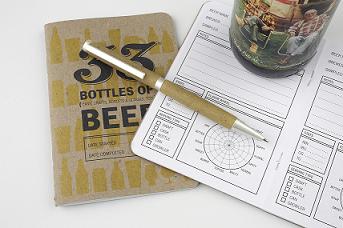
MM beer and journal

Impulse Purchases Are King. If you have items that you think are potentially big sellers for men, consider keeping a supply of them up front by the counter and cash register. While many men will come to a store looking for one or two specific things, they are highly susceptible to what they see while they are on line waiting to make their purchase. Well-placed products with a male slant—which they can pick up and consider while they are being rung up—will often result in a sale.

E-Mail Matters. If you have an e-mail list of your store’s customers, send out an invite for the guys. Host a special day or days for the gents only. Make it a “Casino Shopping Spree.” Keep a deck of cards up by the register. The card that they pull from the deck can be their dollar saving or their percentage off their final purchases. (Number cards can be their face value; you decide how you want to handle picture cards.) However you want to run it, the chance to save money is always appealing.

Why Generation Y? Younger men—guys 34 and under—are a different breed of shoppers. They are being raised in a world that didn’t focus on gender distinctions or differences between the sexes. These younger men are much more like the “traditional” woman shopper. They will engage with sales staff and will just go to a mall to hang out. Be on the lookout in magazines, TV shows, movies, and in your neighborhood for merchandise that would entice this bracket of younger shoppers.
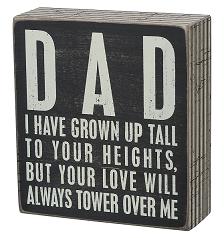
dadPBK

Data About Dad’s Day       
Even though Father’s Day was first commemorated in the United States in 1910, it didn’t receive an official presidential proclamation until 1966, courtesy of Lyndon Johnson. His edict declared the third Sunday in June to be set aside for honoring the fathers of America. In1972,more than 60 years after the first celebration was held in Spokane, Washington, Richard Nixon signed the federal law that made it a permanent fixture on the American calendar.

Even though dads were strongly venerated in popular culture—think Robert Young in Father Knows Best or the Ward Cleaver character in Leave It to Beaver—the full-fledged celebration of a special “dad day” didn’t really gain momentum until the 1980s. Prior to that, a father seemed to be simply content with a chance to read his Sunday paper for an extra hour in peace and quiet and maybe to savor a second helping of bacon and eggs as a Father’s Day treat. It took TV’s Bill Cosby and his preference for high-end multicolored sweaters to show that dads wanted to buy goods and look good.
Nowadays, the opportunity to honor dad with gifts and greetings is a part of the cultural landscape. Interestingly, with single-parent households becoming more and more of the norm, Father’s Day celebrations have expanded to include male mentors. Grandfathers, uncles, cousins, teachers, and coaches are very often the recipient of Father’s Day cards and presents. It’s a new way to honor a century-old innovation.

Father’s Day is the fourth-largest card-giving holiday in the United States. There are roughly 67 million fathers in America, and nearly 100 million cards were bought and sent in 2013 for this holiday. Fifty percent of the cards that were sent were from sons and daughters to their dads; 35% were for “someone special” in a person’s life (meaning male relatives and mentors), and 15% were wives buying for their spouses. Eighty percent of Americans acknowledge the holiday through the exchanging of cards, gifts, celebrations, and get-togethers.

To view the original article please visit: Smart Retailer

Friday, September 13, 2013

Retail Store Management: Secrets of Success


SECRETS FOR SUCCESS IN THE
MANAGEMENT OF RETAIL STORES

Among the reasons why many retail stores are facing ever increasing challenges today is  rapidly changing consumer buying practices, a very dynamic and evolving marketplace and often the “fundamentals” of running a retail business get overlooked.

Industry analysts find there are specific management initiatives that are vital to success in retailing, which includes all types of stores.  Some are obvious, and some are not so obvious.  When one has a firm grip on these techniques, chances for success are greatly improved.

It may be that only one or two of the areas need your immediate attention, but putting these challenges high on your list of priorities can mean many dollars of increased cash flow back to the institution!

EXPENSE MANAGEMENT.  This is frequently a major area of concern.  One should know precisely what the expense allocations should be for each line of your operating expense report.  Operating expenses must be planned, not left to chance.  Expenses must be viewed as a percentage of total sales so as the business “ebbs and flows”, you are still in line with margins goals. A monthly expense spending review of all expenditures is vital and should be administered with a disciplined hand.  Compare actual expenses against planned expenses.  A review every three months can be risky, every six months can be dangerous and once a year can be terminal.

MERCHANDISE PLANNING MANAGEMENT.  The development of a sound merchandise planning and open-to-buy program is crucial to the profitability of any retail operation.  Forecasting and planning must be based on a sound evaluation of current and forecasted sales and inventory figures.  In your merchandise planning program, the development of trends by type and end-use of merchandise is essential.  This is known as classification merchandising.  Growth must not only be planned but must be planned in a manner that will insure profitable growth.  The economy can go down as well as up.  One must be prepared to use brakes as well as power.  Willy-nilly budgeting today for a 5% to 10% increase is not viable in today’s business environment.  Planning and buying merchandise in the right amounts, at the right time and in the right selections is key.  Proper timing of deliveries is essential for control of cash flow and to maximize revenues.

INVENTORY MANAGEMENT.  Managing inventories to yield their highest earning potential is a serious undertaking.  It is essential to continually measure the life cycle of merchandise and to make sound judgments as to whether each item of merchandise is an asset or a liability.  Keeping a handle on the weight of the inventory with regard to vendors, styles, colors, sizes and balanced selections is all important.

Many retailers have been known to have an unacceptably high percentage of their existing inventory in stock for over 180 days.  In that scenario, all that could be achieved is a two time inventory turn, at best.  This old merchandise is most likely out of season.  How much in earnings will be lost on these old goods? Even if the merchandise can be charged back to the vendor, there are the operational and freight costs to consider.

Our inventories are one of the most important assets we have as retailers.  Respect and treat inventories like real dollars because that is what they are.  Inventories that are aged beyond a normal selling period and carried forward steal from net earnings.

MARKDOWN MANAGEMENT.  Timely and well managed markdowns are a necessary part of any retailers profit strategies. There are situations were some markdowns are healthy but excessive markdown can bleed off additional contribution dollars.  It isn’t what sold that counts, but also what hasn’t sold.  Every slow selling or non selling items is a drag on earning potential.  What is an acceptable markdown as a percent of sales?  The saleability of inventories must be evaluated on a regular basis.

Excessive markdowns are a result of little or no planning, overbuying and poor inventory management. 

VISUAL MERCHANDISING MANAGEMENT.  Visual merchandising is the “silent salesperson” in any retail operation.  It is the presentation of properly displayed merchandise, well planned advertising and good housekeeping that portrays store image.  First impressions are important. They influence the customer’s conscious and subconscious decision-making process.  This merchandising technique is essential to attract new business and ensure repeat business.  The effective use of color, design and quality projects the store’s attitude and image.  The object of visual merchandising is to be pleasing to the eye and to suggest satisfaction of customers’ need or wants.

CUSTOMER SERVICE MANAGEMENT.  Thousands or even millions of dollars invested in retail inventory isn’t an uncommon occurrence for both “brick and  mortar” and e-commerce businesses.  It has been observed that without the support of a well trained, enthusiastic sales staff and an effective customer service philosophy the earning potential of a retail operation may very well be hindered.  It is critical for management to develop training programs for their employees.  Training is not a one-shot type of program.  It should be an effective ongoing program with specific objectives to reinforce employee development and company philosophy. The goal is too always improve the customer’s shopping experience and exceed their expectations.

Customers are the most important people ever, either in person or on-line.  They are not dependent on us; we are dependent on them.  We are not doing them a favor by serving them, rather they are doing us a favor by giving us an opportunity to do so.  Arguments are never won with customers. It is twice as hard to get dis-satisfied customers back into your store and often that customer will tell others, making your loss even greater. Develop strategies to attract and retain new customers as there is always attrition in your customer base even with the best customer programs in place. Customers are individuals who bring us their needs and wants.  It’s our job to satisfy those needs and wants by providing value and uncompromising service.

CUSTOMER ANALYSIS MANAGEMENT.  Customer turnover is an inherent part of any retailer’s business.  Customers can move away or leave for many other reasons. For effective customer analysis management we must discover and implement the answers to the following questions:  How do we build our customer base and loyalty recognizing that the customers are constantly changing?  What competitors have enticed our customers away and why?  How do we retrieve customers?  Periodically review your customer’s expectations to see if it has changed and you have not! You may have to change in order to attract the potential customers now represented in your community.  The majority of customers spend their money differently now than they did 5 or 10 years ago.  And this could change again in a few years!

MARKETING. Customer’s buying patterns having been changing rapidly over the last few years. “Consumers don’t think in terms of channels, they simply shop – in stores, online, on their mobile phones, etc. Retailers on the other hand are organized and optimized for channel-efficiency. Over the past decade stores have borne the brunt of this buyer-seller disconnect, a trend only accentuated by the value-consciousness of shoppers following the worst economic recession of our times”.
In the five-year period from January 2008 to January 2013, retail store sales have grown 8.5% (quoted from recent report by EKN Research).  ECommerce sales over the same timeframe have grown 72%. Within this time, the world order of retail has changed. Con­sumers have discovered the power of smartphones, utility-like high-speed Internet connectivity, the power of social media, and tools and services that deliver instant access to product pricing, inventory and reviews.

According to a recent article from EKN Research, Division of Edgell Communications,
“Retailers need to re-organize their strategy, people, processes and technology to:
                        Re-imagine stores as a hub for delivering Omni-channel experiences
                        Re-vitalize stores to deliver unique, beneficial experiences
                        Weave in familiar digital experiences into the physical fabric of the store
                        Combine human intuition with deep consumer insight to develop truly personal relationships with customers.”

Retail/ECommerce businesses must embrace this new technology and use it to their advantage in improving customer retention and attracting new customers. This does not mean that we have to abandon old marketing strategies but re-think them in terms of today’s contact points with customers.

CONTRIBUTION MANAGEMENT.  Contribution management is defined as the amount of profit dollars generated from a retail store. If we reflect over the past several years, retailing hasn’t become any easier.  The fatality rate of all businesses that have operated without sound management techniques has been escalating.  With stores it is all about remaining viable and to avoid becoming a “dinosaur” in the new world order of consumerism. With ECommerce it is not just all about “improving the number of clicks” to your website but how long do they stay, do they come back and do they buy? The rewards for hard work with sound planning are still attainable. 

Contribution Management should be the first consideration, not the last.  If it is last, one can only hope that some profit will be generated by year’s end.  This situation would be similar to an airline pilot starting to fly east to New York without a flight plan.  Such a pilot does, however, have a flight plan.  It is constantly being monitored by his navigator to be sure they remain on course.  When deviations are noticed, corrections are made to get back on course so that the destination chosen will be reached safely.  Sound profit management uses the same principles.  A reasonable profit goal must first be set.  This goal then must be systematically tested to determine whether or not the profit goal is feasible.  Some of the test questions would be: What are the anticipated fixed and variable operating expenses as they relate to annual sales volume?  What is the anticipated markdown percentage as a percent of annual sales?  Is the average initial markup reasonable enough to meet these considerations and remain competitive? What are the inventory turn goals and are they achievable?  And lastly, are the merchandising techniques and tools in place to monitor all segments of the operation on a timely basis?  If the answers to these questions are positive in nature then contributions can be improved much like the airline pilot’s flight plan to New York.

SELF-CONTROL MANAGEMENT.  This management technique may be the most important of all and too often the least applied.  Most successful merchants operate and run their businesses with their heads and not their hearts.

Goal setting is the starting point.  Realistic and attainable goals must be set for all areas of the operation.  To reach these goals and to be a successful retailer, one must be dedicated to the successful implementation of all of the techniques we have discussed here.

Intuitive decisions based on a flare for merchandising are key to building a leading retail store.  At the same time, “Self-Control Management” means that one is willing to exercise good judgment in the decision-making process.  Don’t wildly buy merchandise based only on hopes and dreams of how much you can sell while totally ignoring the plans you so carefully developed!


RMSA is a merchandise planning and cash management company that has been assisting retailers improve their profit performance for over 50 years. RMSA is not just about OTB, but reviews any aspect of the business that impacts financial performance. RMSA continues to speak at industry seminars, workshops and webinars sponsored by a variety of organizations. RMSA has been working with thousands of retailers in the United States, Canada and South America for over 50 years and has established a reputation for optimizing performance and delivering the expected financial goals for our many retail clients.

These clients would be glad to share their stories . . . just let us know.

Dave Downard
Senior Merchandising Analyst & Consultant
626-705-3724 Cell

Friday, August 23, 2013

Combating Internet Pricing - A Survival Guide

Many retailers today worry about the effect of the internet on their brick-and-mortar business.  Many feel that customers will buy from the internet long before they buy from the store, mostly because of pricing and convenience.  This has been made worse by the practice of “showrooming” which happens when customers come to the store, look at a product they want, note the UPC or vendor’s style number, and then go online and find it for less than what you offer.

In fact, one of the larger online retailers who shall remain nameless became famous last year for offering a 5 percent discount to customers if they went into a local store, scanned the UPC code and bought the product online.  That was a brutally competitive move.

So how do you survive while such tactics are practiced?  What makes customers willing to buy in your store instead of buying online?  Here are some tips that we have seen work, from retail stores that are successfully beating the online merchants.


Shopping is STILL fun!  Through all the years that I have been in retail, the death of the brick-and-mortar store has been announced several times.  I remember when the catalogue business grew substantially, and there was great concern that no one would go to the stores anymore.  That has never happened, and even though it can be great to shop online, it will never compete with the social   Customers still love to go to the store, to feel the merchandise, to interact with friends and store associates, and enjoy the entire experience.  You don’t get that when you are all alone in your room.  So the first thing I would recommend is to make sure that your store is a fun place to shop.  Remember, when you open the doors, it’s “retail theater” and the party should be going on right then.  The more fun it is to visit your store, the more the customer relates to and has a great experience with your staff, the more they will visit and the more they will buy.  Keep it fun by having lots of great events, cool contests, and make your store the ‘place to be.’ 
interaction and fun of shopping at a retail store.

On top of that, make sure your sales people are offering incredible customer service.  Make sure they understand the basics of selling, of caring for and offering help to your customers.  The better the customer service, the more likely the customer will feel compelled to buy from you, right there on the spot, rather than waiting for an internet company to ship them.

Better Merchandising  Along the same lines, one of the things that helps defeat showrooming is to have great merchandising that makes the product even more desirable.  If your merchandising shows the product well, you can create instant demand for it.  And the best part about instant demand is that customers want that product now, not 2-4 weeks from now.  Entice your customers with great displays that show off the product, show how it is used, how much fun it is to have, and your customer is more likely to buy it right then and there.

The Best of The Best  Remember, one of the reasons that people go to boutiques (on top of great service) is that those boutiques have scoured the market to find the best of the best.  Sure, if you know the brand you like, you can go to their website and buy there, but what if you want to mix and match brands (to get the best of the best) and you need to know how to combine products from different brands for one solution?  For example, as you put together the nursery, you may find a changing table from Vendor A, that works really great with shelving units from Vendor B, but the bedding from Vendors C and D.  That’s hard to do on the internet.

Prepare your argument  The main advantage that brick-and-mortar retailers have over online merchants is that the product is right there, right now.  It can be a gamble to buy the product online because it could be backordered, or they could ship incorrectly.  Dealing with returns with online merchants can be a major hassle.  So when you find someone who is in your store and they appear to be showrooming, we suggest you play offense, not defense.  Tell them the above two things, but also remind them that you are a local merchant, adding dollars to their local economy, hiring local people, and the best thing they can do for themselves and their local economy is to support local business.   At the same time, you can put the product in their hands and tell them “You can have this right now, right this second, or you can go home and order it and have it a few weeks from now.  Which is better?”  We have seen this work very effectively.  As such, it would be worthwhile to spend a little time on this topic at your next staff meeting (you do have staff meetings, right?).  Talk about these strategies and get your staff ready to combat showrooming with better service, better merchandising, and better selling.

Promote Like Crazy!  One more thing that will help defeat lowball internet pricing is to make sure that you are actively promoting your store.  This means broadcasting your message on all the important channels - Facebook, Pinterest, Instagram, Twitter, etc. - and in those posts you should be showing how relevant and important your store is.  Talk about how you are watching the latest trends, how you are bringing in the most relevant merchandise, how you are ensuring that your customers always have the best of the best.  Remember, nowadays with the massive explosion of online outlets for promotion, your biggest challenge is mindshare.  You want to make sure your customers think about you when you talk about the products that you sell.  The more you can outflow (including email and all the websites mentioned above), the more likely people will think of you and your store, and come in when they need those items.

Sure, lower prices online can be difficult to overcome.  Still, the internet is not that different from any other store that offers low pricing.  Somehow though, since it’s the internet (which has the apparency of being “huge”), retailers seem to think it is harder to compete against this segment.  The truth is that if you apply the basics to your business, control your inventory well, and utilize the above strategies as best you can, you’ll keep the register ringing.

About the Author:
Dan Jablons, President of Retail Smart Guys worked in retail while attending the Ohio State University, where he graduated with a B.S. in marketing and production. He has worked with retailers such as Walmart, Target, JC Penney, American Apparel, Betsey Johnson, Donna Karan, Jimmy Choo, Charles David, Diesel, Oakley, Tumi, Hollywood Bowl, and many others. As a consultant for Retail Smart Guys, Dan brings many years of retail experience to stores of any size to improve their operations, revitalize their marketing, and maximize their profits.  For more information, email Dan at dan@retailsmartguys.com or call 818-720-2585.


Friday, May 10, 2013

Retail Talent Acquisition Quick Tip - Part 6


In honor of our rapidly approaching webinar series
Employee Retention and Engagement 
with Tina Praino, we are offering our readers a series of quick tips related to retail talent acquisition. 

Quick Tip - Part 6
"The foundation of every smart recruiting process is the axiom that 'our organization may be a great place to work, but it's not for everybody. In fact, it's not even for most people.' Contrary to popular belief, there really is an ample supply of talented, hardworking, honest people available--some of whom already work for you." - Bill Catlette and Richard Hadden for Fast Company

Stay tuned for more useful tips and don't forget to register for our rapidly approaching webinar series! 

Employee Retention and Engagement Webinar Series - for Retailers
How to Find the Good Ones and How to Get Them SELLING
Sponsored by: Smart Retailer


Boost My Hiring Process: How to Find the Good Ones - COMPLETE
April 30th (Tuesday) at 11am-12pmPDT
- The importance of a proper job description, how to create them and how to utilize them
- Experiential interviewing, how to zero in on the right skill set, the right attitude and the best fit with simple strategic questions
Each attendee will receive a special gift from the speaker

Engaging My Employee’s: I Hired Them, Now What? - COMPLETE
May 7th(Tuesday) at 11am-12pm PDT
- Find out the difference between orientation and onboarding
- Find out what the key ingredients of a sound onboarding program requires
- Find out what a learning plan is and which members of your team MUST have one
- Learn formal and informal feedback strategies
- Learn about mentor programs
- Find out how to defining career paths
Each attendee will receive a special gift from the speaker

Engaging My Employee’s: A Deeper Dive, Let’s Get Them Cracking REGISTER
May 14th (Tuesday) at 11am-12pm PDT
- Learn to create structured mentorship programs
- Learn to cultivate learning plans to increase productivity and morale
- Find out about gamification in the workplace
Each attendee will receive a special gift from the speaker

Monday, May 6, 2013

Retail Talent Aquisition Quick Tip - Part 5

In honor of our rapidly approaching webinar series
Employee Retention and Engagement 
with Tina Praino, we are offering our readers a series of quick tips related to retail talent acquisition. 

Quick Tip - Part 5

Giving balanced feedback is very easy to do. It is also very easy to forget to balance your feedback and focus only on the negatives. Don’t be a Negative Nelly; if you spend a few minutes focusing on what was done right, you will see your employees’ engagement levels increase!

Stay tuned for more useful tips and don't forget to register for our rapidly approaching webinar series! 

Employee Retention and Engagement Webinar Series - for Retailers
How to Find the Good Ones and How to Get Them SELLING
Sponsored by: Smart Retailer


Boost My Hiring Process: How to Find the Good Ones COMPLETE
April 30th (Tuesday) at 11am-12pmPDT
- The importance of a proper job description, how to create them and how to utilize them
- Experiential interviewing, how to zero in on the right skill set, the right attitude and the best fit with simple strategic questions
Each attendee will receive a special gift from the speaker

Engaging My Employee’s: I Hired Them, Now What? REGISTER
May 7th(Tuesday) at 11am-12pm PDT
- Find out the difference between orientation and onboarding
- Find out what the key ingredients of a sound onboarding program requires
- Find out what a learning plan is and which members of your team MUST have one
- Learn formal and informal feedback strategies
- Learn about mentor programs
- Find out how to defining career paths
Each attendee will receive a special gift from the speaker

Engaging My Employee’s: A Deeper Dive, Let’s Get Them Cracking REGISTER
May 14th (Tuesday) at 11am-12pm PDT
- Learn to create structured mentorship programs
- Learn to cultivate learning plans to increase productivity and morale
- Find out about gamification in the workplace
Each attendee will receive a special gift from the speaker