All About Retailing Blog - This blog tackles the topic of retail technology solutions and key retail trends. One Step Retail Solutions is your one step resource for your retail technology needs.
Is your business’ website doing more than giving customers your location, hours of operation and phone number? Is your brick-and-mortar retail site encouraging customers to check out your website? Cross-marketing your physical and online spaces increases awareness, engagement and revenue for your business. When looking to boost your marketing efforts, here are a few points to consider:
Ensure They Boost Each Other
Marketing across channels is an excellent way to reach new customers and encourage existing ones to return. Although a website can’t deliver the highly-personalized services of a skilled salesperson, it can serve as a valuable bridge to attract customers’ attention. Make sure your website delivers the information your customers need about the products and brands you sell. Include high-quality photographs that encourage them to visit your store in person for a closer look. Boost your website by encouraging retail store customers to sign up for emails that announce sales, pre-orders and other specials.
Discovery: This phase gives customers who aren’t in your geographic area the chance to find you through local online searching. You can expedite this phase by adding your website to local search engine directories so local customers can find your retail space. Make sure your website content includes geographic and product keywords that customers are likely to use in their searches.
Connection: The second phase lets customers see if your store provides the products or services they need without making an actual trip to the store. Develop website content that informs and educates your customers about specific products. Demonstrating knowledge and expertise helps persuade them you’re a credible and trustworthy business.
Sales: The final phase can happen online or in your store.
Impress With Your Landing Page
Most online searches take the customer directly to the website landing page. Like your store, it must convey a positive first impression to encourage visitors to stay and browse. Your site also needs to make your customers feel safe and secure, not like they’re being spammed. Show perks of shopping online, such as free shipping or promotion codes. Also display security badges that testify to your site’s security. A good site will show that its site is accredited by the Better Business Bureau, approved by Norton Secured and a verified merchant from Authorize.Net.
Let Them Research Online and Buy in the Store
Many customers invest more time researching expensive products online before purchasing them from a physical location, according to ShoppinPal. This gives businesses with both online and in-person stores an advantage to target customers. An infographic on MineWhat cites research from RetailingToday that says 60 percent of consumers begin product research through a search engine and visit at least three online stores before deciding where to make the purchase.
Although nothing can replace a personalized, in-store experience, a well-designed website can be a valuable sales tool that encourages customers to visit your store to forge that relationship. For example, Spencers TV & Appliance embeds links on its website that users can click on to call and check on specific products, prices and availability. It’s easy to visualize a good salesperson using this opportunity to bring a potential customer into your store.
Although retail marketers are constantly seeking ways to deliver messages to consumers that are highly relevant to their shopping needs, it appears that their efforts have not yet matched up to rising consumer expectations.
In fact, half of consumers say that they regularly see emails with irrelevant information, even though 71% of retailers believe they send tailored messages to shoppers either always or often, according to a survey from Retail TouchPoints and marketing software provider Magnetic.
Similarly, 61% of retailers claim that they always or often deliver messages tailored to individuals' profiles or interests, but only 30% of consumers see online advertising as relevant to their interests. Additionally, only 24% say they see information relevant to their own shopping interests when browsing a retailer’s site.
In partnership with Magnetic, RTP has released a study revealing the disparities between consumers’ marketing expectations and retailers’ existing strategies. To compile data for the report, titled: Closing The Gap Between People’s Expectations & Retail Realities, RTP surveyed 200 consumers and 100 retail executives from the U.S. and Canada.
“Retailers recognize the need to keep customers at the core of their marketing decisions, but there are barriers to delivering the level of personalized experiences that consumers expect across channels and devices,” said Alicia Fiorletta, Content Strategist at Retail TouchPoints. “Having the right data continues to be among their key challenges.”
These retailer execs use a variety of channels to reach the consumer, but it appears that they need more targeted content to meet shopper expectations. Only 55% of retailers send emails featuring relevant information such as reviews, recommendations, sales or trends; while even fewer (37%) deliver online ads based on consumer interests. Less than half (41%) send a follow-up email about a product after the shopper has abandoned the shopping cart.
Ultimately, this lack of communication can frustrate consumers: Half of surveyed consumers either find it “frustrating” or “extremely frustrating” that online ads are irrelevant to their personal tastes and preferences. Nearly as many (49%) are frustrated that ads are irrelevant to products they’re interested in buying.
The survey concludes that retailers must prioritize their data and information to better understand shopper desires and to successfully reach new people, keep current customers and bring back past shoppers.
“Creating personal experiences across the channels people use and the devices they engage can significantly improve their buying process,” said James Green, CEO of Magnetic. “When it comes to shopping, the most important factors relate to efficiency, ease of use and the ability to make informed decisions. Digital experiences give retailers a unique opportunity to empower shoppers to buy, and prompt them to buy more frequently.”
Television media companies appear to be the first to leverage social word-of-mouth marketing across screens to keep audiences engaged and tuned in. You've probably seen several shows and events display a stream of tweets or Facebook posts directly on your TV or the stage set. Why? It comes down to engagement, and a new way media brands can further connect with viewers. By leveraging the power of their social network investments, TV media companies are broadcasting handpicked, visual word-of-mouth marketing expressions from passionate advocates to build a sense of community with audiences — all of which helps drive viewership and engagement.
Retail brands should take notice because consumer brand expression on social platforms is booming. The best word-of-mouth marketing is user-generated content. On the social web, this means Facebook wall posts and comments, Instagram photo sharing, Pinterest boards, tweets (especially accompanied by a photo), and YouTube videos. A retailer's best brand advocates are socially engaged and enjoy sharing testimonials and content that's authentic and shows a real passion for the brand.
The payoff for amplifying social testimonials on retailer shopping pages is measurable and significant, including the following:
increases in page conversions;
increases in page traffic; and
increases in online revenue.
Daniel Neukomm, strategy leader for La Jolla Group, a multibrand apparel licensing company, put it this way after his company began promoting social word-of-mouth marketing content on e-commerce pages: "We knew that if a consumer could see a relevant product with a relevant social comment, it would create an additional emotional reaction or layer of attachment to what they were viewing. To put the right content in front of the right consumer at the right time next to a product they're considering buying is just a no-brainer."
The ways and means retail brand marketers can amplify word-of-mouth marketing from social user-generated content is multifaceted. Today's omnichannel audience wants a connected shopping experience online, in-store, over mobile devices, on social media platforms or through printed catalogs. Here are five ways retailers can best leverage social word-of-mouth marketing:
1. Augment product-level ratings and reviews on your product pages with brand and category-level social testimonials that are visual. Hint: Look for your fans interacting with you on Instagram, Facbook or Pinterest.
2. Have digital displays in your stores? Take a page out of TV media and stream real-time, curated, visually compelling social testimonials to show off your community of brand advocates who are proud to be your customers.
3. Leverage social graph information (Facebook's term for user demographics) from your highly engaged fans to improve targeting of precision email campaigns. Add social testimonials from "similar to me" advocates to email content targeting specific ge
ographies, age groups or settings that your data reveals.
4. Promote brand-level social testimonials as new advertising content for your partner affiliates and retailers on their web and mobile sites.
5. Show off your best customers’ expressions on social media channels as a community "Fan Board" or "Customer Stories" page on your branded web properties and mobile sites, or even in printed or digital catalogs as aspirational "Look Books" to reinforce the social proof we all need to feel confident in making purchase decisions.
The ability to capture, filter and promote your fans most compelling visual social testimonials and bring them to life across screens and marketing channels is very real. This is marketing, and retailers that take advantage of greater social integration will be a step ahead in the consumer sales cycle. Dennis O'Malley is the co-founder and CEO of ReadyPulse, a provider of testimonial marketing. Dennis can be reached at dennis@readypulse.com.
In today’s changing marketing landscape, your website has become a more powerful tool than ever. As a 24/7 salesman, your website has the potential to be your most powerful asset and the centerpiece of your marketing efforts.
However, rapidly changing technology can make your website feel old and outdated. While sometimes a redesign might be ideal, you may not have the time or money to invest in such a large project. If you're one of the folks that falls into this boat, we have put together a list of 10 simple ways you can improve your website to make it more helpful and useful.
Every job exists thanks to customer funding. As Peter Drucker said, “The customer is the foundation of a business, and keeps it in existence.” And as Dr. Deming said, “What everyone in a company does can be reduced to one of two functions: to serve the customer or serve someone who does.” But how many employees in your organization see their job this way? And how many managerial decisions respect these truths?
In the future, companies that treat customer experience excellence as the context for everyone’s roles, thinking, and actions will outpace their competitors in success. Context is one of five success factors described in my recent article, Customer Experience for the Future: 5 Keys. Context is defined as “the circumstances that form the setting for an event, statement, or idea, and in terms of which it can be fully understood and assessed”. Customer experience excellence as context for every job means that it is always top-of-mind as the primary basis for the way we do our jobs.
In the mainstream we’ve come to think of customer experience management (CXM) as a way to get customers to do things for us: engage in social media, recommend us, renew their purchase, and expand their purchase. But this may not be the most appropriate definition of customer experience management.
As a customer yourself, you know that your experience with a company is much more than what you do about it in social media, recommending, renewing, or expanding your purchases. You know that your experience is as much – or more — about the product working as expected, right the first time and every time – as it is about your purchasing and social interactions.
The responsibility for CXM is largely assigned to marketing, sales and service – exempting most of the company from a customer-oriented mindset. Many employees see their work as a right in and of itself, with logic such as:
“Every company needs an accounts receivable function, so my job is to receive payment as early and often as possible so our books look good.”
“As a corporate lawyer, my job is to protect the company from risks.”
“On the manufacturing line, my job is to produce product according to our deadlines.”
“In engineering, my job is to design products better and faster than our competitors do.”
“In marketing/sales/service, my job is to maximize revenue before month-end, every month.”
“In customer experience management, my job is to maximize our index (e.g. NPS) scores.”
Think of the wasted energy caused by every job having its own reason for existence. This mindset is the basis for organizational silos. And we all know the headaches caused by siloed efforts, data, systems, processes, and politics.
Think of the synergies possible by creating a common rallying point for every job: we do our work so that customers will choose our company for their next purchases. If so, the new logic will be:
“Every customer needs to pay for what they buy, so my job in accounts receivable is to make that process as easy and nice as possible, helping customers want to pay our company.”
“As a corporate lawyer, my job is to help the company operate as smoothly as possible for customers’ long-term well-being.”
“On the manufacturing line, my job is to produce product that meets customers’ standards of quality and timeliness.”
“In engineering, my job is to design products that help customers achieve their goals through us better than through any other source.”
“In marketing/sales/service, my job is to sync my processes and communications to maximize customers’ inclination to buy more, and more often, from us.”
“In customer experience management, my job is to guide the company in preventing hassles for customers and in maximizing value to customers.”
As you can see from these examples, CXM is not something that customer-facing staff take care of. It’s much more than digital or content marketing or touch-point management. It’s much more than encounters, interactions, experiential events and processes, or case-specific resolution. You may think employees in your organization already think like the second list shown above. Test it. Ask a sampling of employees what their role is, and listen carefully for the word “customer”.
CXM is actually about centering everyone’s thinking on realities as customers see them, across their end-to-end process for selecting, getting and using the solutions they’re seeking.
Every manager, at every level and in every functional area, not only has fiduciary obligations and supervisory duties, but also responsibility for how decisions and deliverables contribute to customers’ propensity to buy and rebuy.
You may be wondering about the practicality of shifting everyone’s mindset to a customer orientation for their roles and responsibilities. Here are some practical ways to do it:
Capitalize on the fact that everyone wants their company to be well-liked.
Leverage related corporate values and objectives to help everyone see customer experience excellence as the context for the business’ success, and in turn, for their career success.
Show them how to re-write their job descriptions from this context.
Stream relevant customer comments, from any source, to each department on a regular basis.
Feature succinct customer experience stories (and not just testimonials) at every opportunity.
Give every department their own cut of voice-of-the-customer data, with analysis of patterns, and show them how to create action plans that prevent recurrence of issues.
Weave accountability for engagement in customer experience improvement and innovation into existing routines and processes.
Begin every meeting and training session with the context of customer experience excellence.
Revise performance reviews and recognition and incentive programs with the context of customer experience excellence – and not based on a survey score, but rather, on something employees do as part of their roles and responsibilities.
Every job has a stewardship to customers’ well-being. If not, why fund it?
To view the original article please visit: Inside CXM
As an online store owner, you’re always on the lookout for new ways to drive traffic, but how many times have you invested time, energy and money into a new method of driving traffic only to receive low conversions or maybe even none at all?
Facebook Ads, Google Adwords, SEO, blogging, social media and guest posting are all great methods to drive traffic, unfortunately, most of the time they don’t work as expected. There are lots of possible reasons for this, however, many times it's because you have a leaky bucket. A website that leaks visitors as fast as you can bring them in.
In this post, you’ll learn six foundational marketing tactics that will greatly help convert visitors on your site, bring back qualified visitors that do end up leaving your site, and get the most amount of money from each of your customers, increasing your average order size.
It's time to fix your leaky bucket.
Your Online Store Is a Leaking Bucket
Think of your sales funnel or rather your ecommerce store as a bucket. You have to spend a lot of time, energy and effort to fill that bucket with water (traffic). The problem is, your bucket has holes in it. Big holes. So you keep spending money, burning energy and investing time to keep filling the bucket with water, but the water is pouring out of the holes almost as fast as you can fill it.
What Are Some of These Holes?
There are lots of holes and lots of reasons for these holes. Arguably, every ecommerce business has holes in their bucket. Some are just bigger than others or more prevalent. It can be poor product descriptions, crummy product photos, confusing navigation or maybe high shipping prices. However, many times visitors just weren't ready to purchase quite yet and you let them walk away.
How an Ecommerce Sale Actually Happens
The reality is that most of the time consumers don't purchase the first time to your site. Many will require multiple touch points and nudges to convert them from a visitor to a customer, sometimes over the course of days or even weeks. However, without a few fundamental marketing tactics in place, a customer that leaves your site only has their own memory and experience to rely on to come back and make their purchase.
By implementing several marketing tactics that some of the most successful ecommerce businesses use, you can significantly increase your chances of making a sale. Additionally, when visitors do fall out of your bucket, there's a greater chance you can bring the qualified people back in.
Let’s take a look at one company that is executing these tactics flawlessly, DODOcase.
DODOcase - Website Walkthrough
DODOcase makes handcrafted iPad cases using traditional book binding techniques in San Francisco and were the winners of the Shopify Build A Business Contest in 2010. They obviously knew what they were doing then, and apparently still do.
DODOcase has a marketing strategy that plugs as many holes in their bucket as possible to get the best possible return-on-investment from their advertising dollars. Not only do they do several critical things to keep their visitors in the bucket, but they also implement several strategies to bring customers back that fall out of the bucket and to get the most out of every customer.
Let’s take a walk through a purchase on their online store and highlight some of the key marketing activities they're doing well:
To start, there’s no doubt they have taken the time to develop a beautiful shop with great photography and product descriptions. All the usual conversion optimization tactics are being employed here, but let's see what else they're doing.
Let’s add a product to our cart and checkout. A DODOcase Folio for the iPad Air should do.
What’s this? An upsell suggesting several other products we may be interested in. Let’s add the the Leather Card and Case Wallet to the order.
Hmm, $220.24, that’s a little expensive right now. Maybe we will wait a bit to buy it. Let’s close this tab.
Wow, that’s a good deal. 10% off just for joining their email list. We will add our email. Maybe we will use the 10% discount later.
24 hours later:
An email from DODOcase. Let’s see what they have to say:
The next day while browsing some info about the new iPhone, look what we see. A retargeting ad from DODOcase offering 20% off. That DODOcase is starting to look pretty tempting.
Another day later, while scrolling through Facebook we are hit again. Another reminder of the DODOcase we were looking at a few days prior, again with a 20% offer to come back and complete our purchase.
Ok, ok… after a few days and a few reminders we are ready to purchase, and hey, the 20% off discount is a great deal.
DODOcase's marketing doesn't end at the sale though. After making the purchase, we are hit with a referral offer. In this case, DODOcase offers customers $20 for every person they refer and the people that are referred will receive 15% off their first purchase.
So What Exactly Is DODOcase Doing Right?
As you can see from the short case study above, they're doing a lot of things right and have a pretty comprehensive marketing plan in place to make the most of all their traffic, paid and organic. They have implemented several key tactics to keep people in their bucket, to bring qualified visitors back, and to increase the average order size from customers.
Let's take a look at each one in a little more detail:
Product Upsell - Upsells are important because they give you one last opportunity to present the customer with complimentary products that a.) they may be interested in, b.) might make their experience better (think batteries if they purchased something that doesn’t come with batteries) and c.) help increase your average order value. If that's not enough, one analyst for Forrester said that product recommendations (upsells) are responsible for an average of 10-30% of ecommerce site revenues.
Newsletter Sign Up Popup - Upon trying to leave the site (exit intent), realizing you don’t want to purchase or aren’t ready to purchase, they display a last second, secondary call-to-action. In this case they try to get you to sign up to their newsletter while also providing you with 10% off in the hope that the 10% will sway you over to completing a purchase with them. Although it's important to note that popup signups to some people are considered annoying, in almost every study they convert higher, many times 100%+ better than standard signup forms embedded on your site. The emails collected from a popup can be instrumental in bringing back visitors and don't forget, emails is consistently rated as the best marketing channel for return-on-investment.
Abandoned Cart Email - Abandoned cart emails are vital in ecommerce. An average of 68% of people abandon their carts. These are people that had enough interest to browse your products and add items to their cart. They completed the first step of the checkout but decided to abandon their carts at that point. Abandoned cart emails give you an opportunity to bring that customer back to complete their transaction while it's still fresh in their minds.
Adwords Retargeting - The next day DODOcase began retargeting with display ads on the Google Display Ads network. Retargeting helps reinforce your brand and serve as a reminder to your recent site visitors of your products. In this particular case, DODOcase offered 20% to come back. Retargeting ads have proven to be much more effective than traditional online ads. In fact, in one study web site visitors who were retargeted with display ads were 70% more likely to convert.
Facebook Retargeting - Again, several days later, they began retargeting on Facebook with the same 20% off deal. Combined with the Adwords retargeting, and they were unavoidable if you had an internet connection.
Referral Offer - Upon completing an order, DODOcase offers their customer $20 credit for referring friends in addition to giving all referrals 15% off their first purchase. Referral marketing is incredible important as it represents the perfect opportunity to get your most recent and happy customers to talk about you. Study after study has come to the same conclusion, that people trust and purchase products more from a friend recommendation than any other form of marketing. In fact, according to Neilsen, people are four times more likely to purchase a product when referred by a friend.
How Can You Plug the Holes?
The six marketing tactics discussed above make for a rock solid foundation for your ecommerce business and help you plug some of the biggest holes, leaving you and your site, much more prepared for paid and organic traffic alike.
To begin implementing these tactics yourself, we have rounded up some incredible Shopify Apps to help you get started right away:
Building an ecommerce business is no small task. The "if you build it, they will come" notion does not apply. It's takes a lot of hard work and many times, money to drive targeted and consistent traffic to your online store. That's why it's vital that you have a solid foundation in place to make sure you're making the most from every visitor you do drive to your site.
Implementing even a few of the suggested methods above can have a dramatic effect on your return-on-investment and overall business success, leaving you with a bucket of cash as oppose to a bucket full of holes.
To view the original article please visit: Shopify
Is your business’ website doing more than giving customers your location, hours of operation and phone number? Is your brick-and-mortar retail site encouraging customers to check out your website? Cross-marketing your physical and online spaces increases awareness, engagement and revenue for your business. When looking to boost your marketing efforts, here are a few points to consider:
Ensure They Boost Each Other
Marketing across channels is an excellent way to reach new customers and encourage existing ones to return. Although a website can’t deliver the highly-personalized services of a skilled salesperson, it can serve as a valuable bridge to attract customers’ attention. Make sure your website delivers the information your customers need about the products and brands you sell. Include high-quality photographs that encourage them to visit your store in person for a closer look. Boost your website by encouraging retail store customers to sign up for emails that announce sales, pre-orders and other specials.
Discovery: This phase gives customers who aren’t in your geographic area the chance to find you through local online searching. You can expedite this phase by adding your website to local search engine directories so local customers can find your retail space. Make sure your website content includes geographic and product keywords that customers are likely to use in their searches.
Connection: The second phase lets customers see if your store provides the products or services they need without making an actual trip to the store. Develop website content that informs and educates your customers about specific products. Demonstrating knowledge and expertise helps persuade them you’re a credible and trustworthy business.
Sales: The final phase can happen online or in your store.
Impress With Your Landing Page
Most online searches take the customer directly to the website landing page. Like your store, it must convey a positive first impression to encourage visitors to stay and browse. Your site also needs to make your customers feel safe and secure, not like they’re being spammed. Show perks of shopping online, such as free shipping or promotion codes. Also display security badges that testify to your site’s security. A good site will show that its site is accredited by the Better Business Bureau, approved by Norton Secured and a verified merchant from Authorize.Net.
Let Them Research Online and Buy in the Store
Many customers invest more time researching expensive products online before purchasing them from a physical location, according to ShoppinPal. This gives businesses with both online and in-person stores an advantage to target customers. An infographic on MineWhat cites research from RetailingToday that says 60 percent of consumers begin product research through a search engine and visit at least three online stores before deciding where to make the purchase.
Although nothing can replace a personalized, in-store experience, a well-designed website can be a valuable sales tool that encourages customers to visit your store to forge that relationship. For example, Spencers TV & Appliance embeds links on its website that users can click on to call and check on specific products, prices and availability. It’s easy to visualize a good salesperson using this opportunity to bring a potential customer into your store.
Photo Credit: Provided by Social Monsters with permission to use.
To view the original article please visit: Retail Minded
Want to see more articles like this one? Check these out!
Holographic displays have evolved since their Tupac debut; as Paul Smiths shows, now retailers are using them too.
A window display concept developed by Carl Bresnahan aims to engage and attract potential customers through some technological trickery. The interactive holographic display, titled The Window that Never Sleeps, can be operated even after hours when the store—in this case, a conceptual Paul Smith facade—is closed, embedding a standout image in the minds of shoppers and prompting them to return when the store reopens.
A recently released promotional video by Bresnahan demonstrates the capabilities of the leveraged holographic display of the storefront to attract customers by presenting multiple different colored animated yet uninhabited suits performing human-like actions such as playing with a yo-yo or ‘making it rain.’
An interactive holographic shop window display concept for Paul Smith on Floral Street, Covent Garden, London, Bresnahan’s concept aims to engage and attract potential customers in one of the busiest places in London out of hours. This concept was a degree project and only mocked up in the Floral St window, therefore, it is not currently on display.
The three suits—one a blueish purple, one red and one near-burgundy—are just three of the many available offerings within the store, and watching them move offers a nearly 360 degree visualization of the suits themselves and their fitting.
Far ahead of its time, Bresnahan’s holographic window display is sure to catch the attention of any and all passerby, with a layer of interactivity eliciting an enchanted response that sets the store apart from any others nearby.
Since there’s a significant lack of information available on the Internet regarding the display, why not pay a visit to London and watch a person-less suit throw holographic bills in the air?
Study after study has proven that referral marketing is one of the best forms of marketing when it comes to sales and conversions. Simply put, referral marketing, sometimes also called word-of-mouth marketing, is just people purchasing products based on someone else's opinion or influence. It's a powerful marketing channel because people trust the opinions of other people in their lives and people they respect, whether that be family, friends, social media influencers or big stars.
It makes sense, we regularly get advice from our friends on which TV shows to watch, movies to rent, or restaurant to go to. And, as end consumers ourselves, we wan’t to share our stories, the products we buy and the brands we choose. This becomes magnified when the buying experience and products are exceptional.
In this post, we will show you the three fundamental reasons referral marketing is so powerful, some examples of extremely successful referral campaigns, and provide you with seven tactical steps to build a powerful referral marketing engine for your business.
Let's jump into it.
Why Is Referral Marketing So Powerful?
We know that word-of-mouth and referral marketing is powerful and is continually rated as one of the most powerful forms of marketing, but why?
Let’s take a look at three core reasons for this:
1. Precision Targeting
Have you every tried using Google Adwords or Facebook Ads just to watch your money disappear, literally before your eyes? Many times this isn’t the fault of the platform, rather your targeting. A great marketing campaign involves two key components, a great message and laser targeting.
Referral and word-of-mouth marketing tend to be much more targeted because people tend to know their friends and social audiences pretty well. This allows your brand message to spread more effectively than with most other marketing channels.
2. Trust Factor
Trust goes a long way when it comes to convincing someone to buy something. If we don't trust someone, we aren't going to listen to them. Consider the last time a salesperson you know is on commission tried to sell you something. You likely had doubts about his authenticity due to a lack of trust. With referral marketing though, the sales pitch is usually coming from someone that you either know well, like friends and family, or it's coming from someone you have trust in, like a favorite blogger.
Time and time again, studies have shown that people almost always trust these people's opinions over generic advertisements and sales pitches carefully crafted by the brand themselves.
Need proof? A recent Neilson Trust Study showed that referrals are the most trusted form of advertising by a large margin:
But wait… there’s more. If you looked at the graphic above and only looked at the first row (Recommendations from people I know), you may of missed something. Position three (Consumer opinions posted online) and position four (Editorial content such as newspaper articles) are all also forms of referral marketing.
Remember, referrals aren't just limited to friends and family. They can come from a variety of sources, provided the receiver of the message trusts them. So what are the major types of referral channels?
Friends/Family
News Publications
Customer Reviews and Opinions Posted Online
Influencer Opinions (Bloggers, Social Media Influencers)
Testimonials
3. Reach and Acceleration
Not long ago, reach of the average reach of a typical consumer was limited. For the most part it was contained to the number of people they saw in person each day or talked to on the phone. In this day and age though, the average consumers' reach is much larger and for many people with strong social followings, it can be enormous. Some consumers now have the power to make or break a business by what they say about it online.
With a simple Facebook post, Twitter tweet or Instagram selfie, the average consumer can now reach hundreds, if not thousands or friends (who again trust their opinions) in a matter of seconds. That kind of social reach is a critical reasons to why referral marketing has only gotten bigger over the last ten years.
Referral Marketing Examples
So now we know referral is huge and understand the reasons why it's so important, let's look at a few examples of companies that used referral marketing to catapult their businesses.
Example 1: Dollar Shave Club
Dollar Shave Club is a great example of an ecommerce company that used referral marketing in the form of a marketing video to launch their business. Dollar Shave Club created a honest and cheeky video that now currently sits at 16 million views.
Take a look at the video below:
According to Entrepreneur.com, in the first 48 hours after the video debuted on YouTube, over 12,000 people signed up for the service, by the end of the week, that number over doubled to over 25,000.
Although many people would call this a viral marketing campaign, the truth is every single one of those 25,000 customers was referred by someone that had an enjoyable experience with Dollar Shave Club by consuming their video content.
Example 2: Harry's
Harry’s, a new grooming product company in the ultra competitive market of shaving suppliers for men grew extremely quickly, thanks to referral marketing.
In a detailed post on the 4-Hour Work Week blog, Jeff Raider, co-founder of Harry’s describes the referral based launch campaign they used to acquire over 100,000 sign-ups before ever even launching.
By setting up a referral marketing campaign on their pre-launch landing page that rewarded people with free shaving products in exchange for sharing their brand, they were able to launch to a massive audience and have continued to grow to over 40 employees.
So maybe these are two very extreme cases of referral marketing done right. However, the underlying message you need to understand is that all this was possible because of the power of referral marketing.
How Do You Use And Implement Referral Marketing?
Implementing your own referral strategy to increase referrals and sales isn't difficult. Here’s seven tactics you can implement today for your own online store:
1. Provide Exceptional Customer Service and Buying Experience
Are the core of every and all referrals is great products, exceptional customer service and a great overall buying experience. This is fundamental to any referral campaign.
To start, evaluate the buying experience of your own store, looking at it from a customer perspective and ask yourself what's worth sharing with your friends?
2. Pay Attention To Your Analytics
You’re probably already getting referrals and don’t even know it. Google Analytics has a whole section on referrals that can help you pinpoint other sites that are linking and referring people to you. This report can be can be broken down to not just visitors but customers as well, giving you a deep understanding of which of the referring websites are the most qualified.
With this knowledge, you can reach out to those sites and work out a plan to acquire even more traffic.
For example, you may work out:
Additional mentions in upcoming posts
Guest blog post
Referral program to share profit with them
3. Make Your Products and Product Experience Sharable
There are many ways to create a wow factor for your customers. Consider your packaging and unboxing experience. In a previous post on shipping and fulfillment we introduced you to the exceptional effort Trunk Club makes to create a great, share-worthy experience for customers.
You can see from their packaging below that their customer unboxing experience is very central to their overall brand experience and makes for a great photo to share on Instagram and other social networks.
Trunk Club does an such exceptional job at wow'ing customers with the packaging experience, that customers make unboxing videos on YouTube which furthers amplifies Trunk Club's reach through referral marketing.
Everlane is another great example of a brand that uses their packaging as a marketing channel. Items from Everlane arrive wrapped in craft paper with an Everlane sticker and a thank you note that encourages people to share a photo of their purchase on social media.
Consider how you can provide a wow factor to customer that makes them compelled to share your products and refer your brand to their network.
4. Make It Easy For Visitors And Customers To Refer Your Brand
You always want to make sure you’re making it as easy as possible to share your products and refer your brand. There are many ways you can do this. Consider how MeUndies Underwear has done this on their site by adding it right to their main navigation. There is no doubt that referring friends is an important call-to-action for them.
After you click it, they also make it easy by pre-populating the Twitter and Facebook message so you don’t have to think of one.
How can you make it as easy as possible for people to share your products? You may also want to consider smaller, but effective tactics like adding social sharing badges to every product page.
5. Implement a Referral Program
Sometimes people need a nudge. Providing rewards for referrals can be just the thing to get your visitors and customers sharing your brand with their friends and family.
In the example at the beginning of this post, we showed you how Harry’s offered several tiers of rewards in the form of products to get people to share their pre-signup landing page. You can do similar by offering rewards through a referral or loyalty program.
There are lots of really solid apps in the Shopify App Store that can help you quickly implement a great referral/loyalty program.
Influencers within your niche can be a goldmine of referral traffic and sales. The key is to find influencers who's following is close as possible to your target market.
So maybe you're not at the point you can afford to pay Hilary Duff to refer your product, however there are plenty of other influencers out there with small, although still huge audiences you can work with. We touched on influencer marketing in this post and this post, but influencer marketing can be as easy as reaching out to a popular blogger, YouTuber, or Instagramer and asking if they do sponsored postings or if they would like your product for a review.
7. Reviews Are Referrals Too
People trust what other customers say about your company more than what you say so make sure you encourage customers to leave reviews after their purchase.
As an example, looking at the product page for BeardBrand Tree Ranger Beard Oil, we can see they have over 400 reviews and an average rating of 4.7 out of 5. The reviews might not drive new traffic to your site but they will help people still on the fence convert.
Conclusion
Referral marketing is a powerful and important component for every business. Implementing some basic tactics can help encourage and facilitate the referral process which can be a major source of new sales.
For more information and tips and tricks when creating a referral program for your brand, check out the bonus section below.
The view the original article please visit: Shopify
Want more articles like this one. Check out these:
Social networks do not drive a lot of e-commerce sales directly (see chart), but they do influence shoppers by helping them discover new products to buy. Now some retailers are leveraging that influence to drive sales in stores.
Nordstrom recently announced that it's installing video monitors in more than 100 of its stores to display products being shared on social shopping app Wanelo. "It's a purely customer-driven strategy," said Bryan Galipeau, Nordstrom's social media director, in a press release. "We take a snapshot of that trending category once every week, and we will then match that up against our inventory and what's available in those stores so we're providing a good customer experience."
Facebook influences 30% of American women when deciding what professional clothing to buy. Pinterest influences 22%, according to a joint study by Netbase and Edison Research.
When it comes to clothing for a special occasion, Pinterest influences 28% of American women and Instagram influences 17%.
BI Intelligence
In the BI Intelligence report, we analyzed the data and spoke to leaders in the social commerce space to understand how their companies are adding value at different stages of the retail and e-commerce "purchase funnel," the long process that ultimately leads to a retail sale.
Some of the latest trends include building social networks around e-commerce platforms, partnering with brands, and otherwise transforming social commerce's strengths for Pinterest-style digital window-shopping. The report looks at the most important way retailers are leveraging social engagement to drive purchases.
Here's how social commerce companies are driving sales:
It's not about click-to-buy: Social commerce is not simply transactional — it's not just about offering a click-to-buy link next to an offer on Facebook. Social commerce will never be what some have wanted it to be, an "Amazon killer."
There are a few ways to encourage purchases:Retargeted advertising may be one missing link. It enables social commerce to connect the sales funnel from end-to-end by serving ads that remind users of products they have browsed across the Web but have not yet purchased. Facebook has made huge strides with its retargeted efforts.
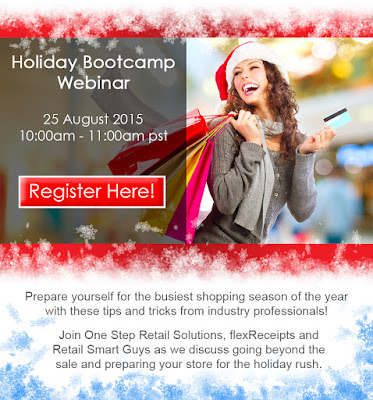
Join us for our annual Holiday Boot Camp webinar to help prepare yourself for the busiest shopping season of the year with these tips and tricks from industry professionals!
Collaboration has led to some of the greatest achievements
of all time ranging from the discovery of DNA to the creation of Fortune 500
companies. So why shouldn’t the same idea work for your business success too?
“Shop Local!” has
been a popular theme giving the small to medium size retailers the business opportunity
to collaborate and reach new customers that will keep coming back. We have a
few suggestions of how to make your business standout in your community by
finding the right partnerships to increase sales growth.
1.A Passport Program Talk to similar businesses in your community to create a
passport program for customers to engage in! You can schedule the program for
any length of time, but by having it occur for a day or over a weekend, you
will have a much better chance of customers getting to every store.
For this passport program, each retailer will give a stamp
whenever a customer makes an in store purchase during the designated time frame.
At the end, customers who have filled their passport can turn it in to be
entered to win a gift basket with goodies from all the places they shopped that
day! This is a great opportunity for you and your customers to promote this on
social media and tag retailers to drive traffic to their website.
Not only will you have an increase of traffic through your
front door, but you’ve created relationships with your retail neighbors that
can be very valuable in the long run!
Ex. South Lake in
Pasadena hosts a Holiday Fest each December that all of the local retailers can
participate in and promote!
2.Choose a Charity
If the passport program is a success and your new team of
retailers would like to host another event, selecting a charity to receive your
donations is a great way to build mutually beneficial partnerships while
helping others. You can select certain items in your store or a percentage of
each purchase can go towards the proceeds to a charity in your local area.
This gives retailers involved a chance to cross promote on
social media, in store, and directly to customers while assisting those in need!
Ex. Three Dog Bakery
hosts a food drive for one month at each of their locations. They’ve made it
into a competition between their stores of who can raise the most money for
their local animal focused charity!
3.Know your niche market and utilize it!
Knowing who your market is and where to reach them is
crucially important. Teaming up with companies that consist of your possible
clientele can be great for new business.
For example, if you own a store that sells athletic clothing
such as yoga pants or running gear, hosting a trunk show for your local Yoga or
Pilate’s studio or running club gives you direct contact to your niche market!
People may not buy everything at the trunk show, but it provides an incentive
to stop by your store later or you can ask the owner if you can leave business
cards or flyers at their front desk and see your customer base grow! You can
also offer an incentive to those that make a purchase at your store for the
opportunity to try out a free sweat session at a local Yoga, Pilates, dance studio
or Crossfit gym
*This will help cross promote to your target demographic
while creating mutually beneficial business partnerships within your community.
Ex. A Snail’s Pace
teamed up with running shoe company, New Balance, for their pub run! Runners
were able to try out new shoes from New Balance and finish the night with a
drink.
4.Sharing Advertising
Marketing your store can be expensive and you want to make
sure you’re utilizing the right tools for the best bang for your buck. Social
Media has great platforms for retailers to communicate directly to consumers,
but if they’re not searching directly for your business, it can be difficult to
reach the right audience.
Consider working with a retailing neighbor to split the cost
of mailers or sponsorship for a community event in your area. There is a high
chance that any advertisements will be posted in their store as well, giving
your business more promotion!
Ex. The Ann Arbor
Summer Festival has many different levels of sponsorship allowing for any size
retailer to be a part of the event!
Teaming up with other local businesses gives every retailer
a chance to be more involved in their community and increase traffic to their
stores. Once the customers are in your
door, it’s up to your stellar sales staff and unbeatable customer service to
create loyal customers who are excited to return, even when there isn’t a
promotion occurring. Start partnering up and encourage people to Shop Local!
If there is something that has worked for your business we
would love to hear your story and share it on our social media platforms!
Please feel free to email us at: info@onestepretail.com