Friday, August 21, 2015

Referral Marketing 101: 7 Tactics to Launch Your Own Referral Campaign

by Richard Lazazzera
Referral Marketing 101: 7 Tactics to Launch Your Own Referral Campaign
feature

Study after study has proven that referral marketing is one of the best forms of marketing when it comes to sales and conversions. Simply put, referral marketing, sometimes also called word-of-mouth marketing, is just people purchasing products based on someone else's opinion or influence. It's a powerful marketing channel because people trust the opinions of other people in their lives and people they respect, whether that be family, friends, social media influencers or big stars.

It makes sense, we regularly get advice from our friends on which TV shows to watch, movies to rent, or restaurant to go to. And, as end consumers ourselves, we wan’t to share our stories, the products we buy and the brands we choose. This becomes magnified when the buying experience and products are exceptional.

In this post, we will show you the three fundamental reasons referral marketing is so powerful, some examples of extremely successful referral campaigns, and provide you with seven tactical steps to build a powerful referral marketing engine for your business.

Let's jump into it.


Why Is Referral Marketing So Powerful?

We know that word-of-mouth and referral marketing is powerful and is continually rated as one of the most powerful forms of marketing, but why?

Let’s take a look at three core reasons for this:


1. Precision Targeting

Have you every tried using Google Adwords or Facebook Ads just to watch your money disappear, literally before your eyes? Many times this isn’t the fault of the platform, rather your targeting. A great marketing campaign involves two key components, a great message and laser targeting.
 
Referral and word-of-mouth marketing tend to be much more targeted because people tend to know their friends and social audiences pretty well. This allows your brand message to spread more effectively than with most other marketing channels.


2. Trust Factor

Trust goes a long way when it comes to convincing someone to buy something. If we don't trust someone, we aren't going to listen to them. Consider the last time a salesperson you know is on commission tried to sell you something. You likely had doubts about his authenticity due to a lack of trust. With referral marketing though, the sales pitch is usually coming from someone that you either know well, like friends and family, or it's coming from someone you have trust in, like a favorite blogger.

Time and time again, studies have shown that people almost always trust these people's opinions over generic advertisements and sales pitches carefully crafted by the brand themselves.

Need proof? A recent Neilson Trust Study showed that referrals are the most trusted form of advertising by a large margin:

 
But wait… there’s more. If you looked at the graphic above and only looked at the first row (Recommendations from people I know), you may of missed something. Position three (Consumer opinions posted online) and position four (Editorial content such as newspaper articles) are all also forms of referral marketing.

Remember, referrals aren't just limited to friends and family. They can come from a variety of sources, provided the receiver of the message trusts them. So what are the major types of referral channels?
  1. Friends/Family
  2. News Publications
  3. Customer Reviews and Opinions Posted Online
  4. Influencer Opinions (Bloggers, Social Media Influencers)
  5. Testimonials


3. Reach and Acceleration

Not long ago, reach of the average reach of a typical consumer was limited. For the most part it was contained to the number of people they saw in person each day or talked to on the phone. In this day and age though, the average consumers' reach is much larger and for many people with strong social followings, it can be enormous. Some consumers now have the power to make or break a business by what they say about it online.

Hilary Duff holding up a Wildflower iPhone case

With a simple Facebook post, Twitter tweet or Instagram selfie, the average consumer can now reach hundreds, if not thousands or friends (who again trust their opinions) in a matter of seconds. That kind of social reach is a critical reasons to why referral marketing has only gotten bigger over the last ten years.


Referral Marketing Examples

So now we know referral is huge and understand the reasons why it's so important, let's look at a few examples of companies that used referral marketing to catapult their businesses.


Example 1: Dollar Shave Club

Dollar Shave Club is a great example of an ecommerce company that used referral marketing in the form of a marketing video to launch their business. Dollar Shave Club created a honest and cheeky video that now currently sits at 16 million views.

Take a look at the video below:
 
According to Entrepreneur.com, in the first 48 hours after the video debuted on YouTube, over 12,000 people signed up for the service, by the end of the week, that number over doubled to over 25,000.
 
Although many people would call this a viral marketing campaign, the truth is every single one of those 25,000 customers was referred by someone that had an enjoyable experience with Dollar Shave Club by consuming their video content.


Example 2: Harry's

Harry’s, a new grooming product company in the ultra competitive market of shaving suppliers for men grew extremely quickly, thanks to referral marketing.

In a detailed post on the 4-Hour Work Week blog, Jeff Raider, co-founder of Harry’s describes the referral based launch campaign they used to acquire over 100,000 sign-ups before ever even launching.

By setting up a referral marketing campaign on their pre-launch landing page that rewarded people with free shaving products in exchange for sharing their brand, they were able to launch to a massive audience and have continued to grow to over 40 employees.
 

So maybe these are two very extreme cases of referral marketing done right. However, the underlying message you need to understand is that all this was possible because of the power of referral marketing.

How Do You Use And Implement Referral Marketing?

Implementing your own referral strategy to increase referrals and sales isn't difficult. Here’s seven tactics you can implement today for your own online store:
 

1. Provide Exceptional Customer Service and Buying Experience

Are the core of every and all referrals is great products, exceptional customer service and a great overall buying experience. This is fundamental to any referral campaign.

To start, evaluate the buying experience of your own store, looking at it from a customer perspective and ask yourself what's worth sharing with your friends?
 

2. Pay Attention To Your Analytics

You’re probably already getting referrals and don’t even know it. Google Analytics has a whole section on referrals that can help you pinpoint other sites that are linking and referring people to you. This report can be can be broken down to not just visitors but customers as well, giving you a deep understanding of which of the referring websites are the most qualified.

 
With this knowledge, you can reach out to those sites and work out a plan to acquire even more traffic.

For example, you may work out:
  • Additional mentions in upcoming posts
  • Guest blog post
  • Referral program to share profit with them

3. Make Your Products and Product Experience Sharable

There are many ways to create a wow factor for your customers. Consider your packaging and unboxing experience. In a previous post on shipping and fulfillment we introduced you to the exceptional effort Trunk Club makes to create a great, share-worthy experience for customers.

You can see from their packaging below that their customer unboxing experience is very central to their overall brand experience and makes for a great photo to share on Instagram and other social networks.


Trunk Club does an such exceptional job at wow'ing customers with the packaging experience, that customers make unboxing videos on YouTube which furthers amplifies Trunk Club's reach through referral marketing.


Everlane is another great example of a brand that uses their packaging as a marketing channel. Items from Everlane arrive wrapped in craft paper with an Everlane sticker and a thank you note that encourages people to share a photo of their purchase on social media.
 

Consider how you can provide a wow factor to customer that makes them compelled to share your products and refer your brand to their network.

4. Make It Easy For Visitors And Customers To Refer Your Brand

You always want to make sure you’re making it as easy as possible to share your products and refer your brand. There are many ways you can do this. Consider how MeUndies Underwear has done this on their site by adding it right to their main navigation. There is no doubt that referring friends is an important call-to-action for them.

After you click it, they also make it easy by pre-populating the Twitter and Facebook message so you don’t have to think of one.

 
How can you make it as easy as possible for people to share your products? You may also want to consider smaller, but effective tactics like adding social sharing badges to every product page.

5. Implement a Referral Program

Sometimes people need a nudge. Providing rewards for referrals can be just the thing to get your visitors and customers sharing your brand with their friends and family.

In the example at the beginning of this post, we showed you how Harry’s offered several tiers of rewards in the form of products to get people to share their pre-signup landing page. You can do similar by offering rewards through a referral or loyalty program.

 
There are lots of really solid apps in the Shopify App Store that can help you quickly implement a great referral/loyalty program.

Some of them include:

6. Capitalize on Influencers

Influencers within your niche can be a goldmine of referral traffic and sales. The key is to find influencers who's following is close as possible to your target market.


So maybe you're not at the point you can afford to pay Hilary Duff to refer your product, however there are plenty of other influencers out there with small, although still huge audiences you can work with. We touched on influencer marketing in this post and this post, but influencer marketing can be as easy as reaching out to a popular blogger, YouTuber, or Instagramer and asking if they do sponsored postings or if they would like your product for a review.

7. Reviews Are Referrals Too

People trust what other customers say about your company more than what you say so make sure you encourage customers to leave reviews after their purchase.

As an example, looking at the product page for BeardBrand Tree Ranger Beard Oil, we can see they have over 400 reviews and an average rating of 4.7 out of 5. The reviews might not drive new traffic to your site but they will help people still on the fence convert.


Conclusion 

Referral marketing is a powerful and important component for every business. Implementing some basic tactics can help encourage and facilitate the referral process which can be a major source of new sales.

For more information and tips and tricks when creating a referral program for your brand, check out the bonus section below.

The view the original article please visit: Shopify

Want more articles like this one. Check out these:

Wednesday, August 19, 2015

This Is How Retailers Are Using Social Media In Stores To Drive Sales

 Jul. 4, 2014, 11:13 AM
bii social conversion rates 4
BI Intelligence
 
Social networks do not drive a lot of e-commerce sales directly (see chart), but they do influence shoppers by helping them discover new products to buy. Now some retailers are leveraging that influence to drive sales in stores. 
 
Nordstrom recently announced that it's installing video monitors in more than 100 of its stores to display products being shared on social shopping app Wanelo. "It's a purely customer-driven strategy," said Bryan Galipeau, Nordstrom's social media director, in a press release. "We take a snapshot of that trending category once every week, and we will then match that up against our inventory and what's available in those stores so we're providing a good customer experience." 
 
Brands such as Sephora and Lululemon are now using Wanelo and other social networks to keep tabs on women's fashion trends. A recent report from BI Intelligence noted the following stats about how social drives sales:
  • Facebook influences 30% of American women when deciding what professional clothing to buy. Pinterest influences 22%, according to a joint study by Netbase and Edison Research. 
  • When it comes to clothing for a special occasion, Pinterest influences 28% of American women and Instagram influences 17%. 
 
bii social media fashion
BI Intelligence
 
In the BI Intelligence report, we analyzed the data and spoke to leaders in the social commerce space to understand how their companies are adding value at different stages of the retail and e-commerce "purchase funnel," the long process that ultimately leads to a retail sale.
 
Some of the latest trends include building social networks around e-commerce platforms, partnering with brands, and otherwise transforming social commerce's strengths for Pinterest-style digital window-shopping. The report looks at the most important way retailers are leveraging social engagement to drive purchases. 
 
Here's how social commerce companies are driving sales: 
 
In full, the report: 

To view the original article please visit: Business Insider
 
Want more articles like this one? Check out these blogs:
 

Friday, August 14, 2015

Preparing Questions for New Vendors

Monday, June 29 2015

MAGIC is right around the corner, and while many retailers use their trip to MAGIC to meet with their established vendors, many also attend to seek out something new for their stores. As a guideline, below are 9 things to keep in mind when meeting with a new vendor for the first time.
  1. Validate your buying decisions.
    Ask the sales person to show you proven styles and their forecast for their cutting tickets to ensure complete shipping on your groupings.
     
  2. Use real world sensibility.
    Ask yourself if adding this merchandise will help differentiate your store from other retailers. It is important to add product that will help brand yourself and continually add freshness to your stock.
     
  3. Establish the buyer/seller relationship.
    Set clear expectations from both sides. Know your open to buy in every category.  Negotiate all terms and prices upfront before you sign your order. 
     
  4. Understand on-line competition.
    Look for product on the floor that is not necessarily offered to on-line customers. This will give you a unique twist of product demand for your store.
     
  5. Demand quality.
    Make sure you are clear with your vendors on return policies if product is not shipped the same as ordered.
     
  6. Ask about seasonal product availability.
    Find out what promotions are available and off price merchandise. Make sure you have clear shipping dates for these groups.
     
  7. Don’t feel pressured into buying more because of pack minimums.
    Order minimums tend to come in pre-packs or in footwear size runs. Ask about broken packs, payment due date and lowered shipping costs with set minimums.
     
  8. Know your brand before you invest.
    Do your homework. Find out how many seasons the company has been shipping. Ask other store owners about brands they carry and the company’s shipping rate. Check them out ahead of time with financial institution. The more you know about a vendor and their history, the safer your investment will be.
     
  9. Know the hidden costs.
    If you are buying from a company who manufactures off shore, make sure there are no import/export taxes or fees added to your bottom line purchase.                                              

 Hopefully these guidelines have helped you get #MAGICREADY. Now take the next step and check out this show's 5 unique Buyer's Guides – tailored to give you a lay of the land and a sneak peek into some of the brands that await you. Get the Buyer's Guides Now »

To view the original article please visit: MAGIC Blog
 
Like this topic? Check out these articles:
 

Monday, August 10, 2015

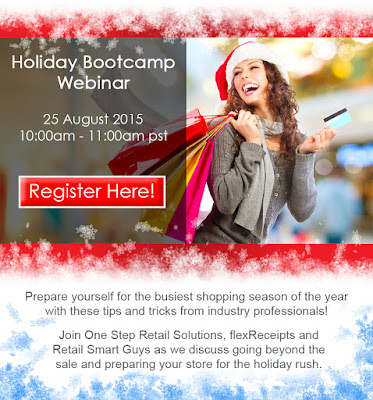
Holiday Bootcamp Webinar on 8.25.15

https://attendee.gotowebinar.com/register/8025628208609442561
 

Join us for our annual Holiday Boot Camp webinar to help prepare yourself for the busiest shopping season of the year with these tips and tricks from industry professionals!

3 Deadly Traits That Kill Your Efforts To Attract and Keep Customers

The Retail Doctor 08 | 09 | 15            

Some of the most popular questions people have for me are:

How do I get more customers in my store?
How do I increase my sales?
How can I sell more?

I get it. Traffic to stores and malls are down, and while you might be tempted to haul out that old losers limp They’re all buying online, don’t.

The fact is 85% of the shopping that is to be done for the foreseeable future according to McKinsey will be in brick and mortar stores.

According to TimeTrade, as much as mobile shopping is hyped, the reality is mobile purchasing is slow to grow; only 13% of respondents have previously made a purchase using a mobile device.
 

So if the endless aisles of online aren’t the culprit to lower store sales, what is?


The traits and skills necessary to engage shoppers, to get them to buy today and to tell their friends about their wonderful experience are largely missing throughout retail - from the highest luxury brands, to the biggest big boxes, all the way to the smallest boutiques.

In short…

We have to unpack the baggage of our lives if we are to be able to escape into the world of retail and our customers.

What does that mean?

Quite simply, most of us have been able to get away with some very bad personal habits in our own lives.

We listen to talk over someone.
We allow ourselves to be distracted while still expecting no one can tell.
We sympathize when we need to empathize.

Here are the 3 traits you need to adopt and use if you are trying to attract and keep your customers:

Concentrating on the Why

How many times have you forgotten a call you were supposed to make? How about letting a deadline slip ? How many times have you chatted on the phone while checking email or Facebook?

We are a distracted group balancing multiple sources of information - and none of it too well.

That plays out on your salesfloor when employees only half-concentrate on your shoppers.

When they only half-understand why they are there.

That results in only half-hearted engagement...and shoppers leave.
 
Actress Katherine Hepburn noted that Spencer Tracy had the ability to tune out the audience or the crew to concentrate just on the person speaking to him. It is what made audiences connect with him.

When we don’t concentrate on the shopper for more than a few seconds, we only grasp a snippet of what they say and based on that, we react.

Consider a couple who walks into an independent nursery looking for something to plant. They ask an employee what type of palm tree they can put by their pool. The salesclerk blurts, “You can’t put a palm tree by a pool. They are just too dirty!”
 
“Then what can we plant?”
 
“Pool plants over there.” He points, turns and leaves to return to the counter.
 
The wife thinks, That was rude and he doesn’t know any more than we do. Ten seconds later they’re in their car headed for the big-box.
 
Since he didn’t concentrate on his shopper to determine why they wanted the tree, he didn’t understand that they didn’t necessarily want a palm tree; what they wanted was a tall accent tree for their pool.
 
A great salesperson, one who is interested in meeting another human being first and selling the widget second, develops their concentration skills so that the only person they are interested in at any given moment is the person in right front of them.
 
When you develop the skill of concentration, you ask yourself when looking at a new customer…
 
Of all the days in their life, why today are they walking in to this store?
 
To answer that question, you concentrate on the shopper to learn more than their first words might say.
 
You can understand that shopper’s gift might be to receive someone else’s forgiveness, or their purchase is to reward themselves, or in the tree story, to find a final addition to the dream backyard they are creating for their friends and family.
 
When you can concentrate on their reason for being in your store, you can develop the next trait...


Listening For The What

Being able to listen is related to concentrating – but adds the what, not just the why.
 
When I first started working on my choral-conducting, my professor Rod Eichenberger, would stop me mid-phrase and ask, “Are you getting the sound you want?” 
 
“I dunno” I replied. I was so concentrated on why my hands had to move in a certain way that I failed to connect my actions to what I was hearing from the chorus. 
 
Notice, he whispered in my ear... and I restarted. 
 
Noticing is listening. It’s what tells another human being they are worthy of your interest. 
 
When we don’t feel listened to, we shut down. 
 
How we hear someone is falling on deaf ears as we text, emoji, and gif our communication skills. 
 
But if you want to be a professional, a salesperson who enjoys their job and the fun of selling, you must standout from those who are awash in a world of words they fail to hear. 
 
I came face-to-face with such an unlistening person behind a counter at a deli...but it could have been anywhere. 
 
When she asked what I wanted, I said “A six-inch chicken sub on white with green peppers.” 
 
She put on her gloves and asked, “Was that white or wheat?” 
 
“White.” 
 
“And what did you want?” 
 
“A chicken sub with green peppers.” 
 
“Was that a six- or twelve-inch?” 
 
“Six-inch.” 
 
“What did you want on it?” 
 
“Green peppers.” 
 
“Did you want cheese?” 
 
“No, just the peppers.” 
 
“You don’t want me to warm it up first?” 
 
“Yes, I want it warm.” 
 
“Well you said something about it being cold.” 
 
“What are you talking about? I never mentioned anything about cold.” As I looked down, she was preparing a twelve-inch sub. “Uh, that’s supposed to be a six-inch.”
“Oh, I really can’t do two things at once.” 
 
“Then you are in the wrong business,” I said. 
 
Brutal like Donald Trump, maybe. 
 
But the point is there are millions of employees working in retail who are only half-hearing what people are saying. 
 
That means they’re only half-understanding what their shopper is trying to solve. 
 
That translates into only half-caring about what that shopper wants. 
 
And probably only half-caring that they work at your store. 
 
No wonder so many shoppers feel disconnected when they go shopping in a brick and mortar store...the one place their money should be making people listen to them. 
 
So how do you develop your employees’ listening skills?
 
A fun exercise to use in a meeting is to select a true story you have experienced with a shopper. Write it out so you make sure you get all you want into the story. Give as much detail as possible but don’t make it so straightforward; include some irrelevant details about the weather, or you getting to work on time, or the trash overflowing - doesn’t matter.   
 
Give your employees pads of paper and pens. Tell your story. (If you really want to test them, leave out one or two sentences.) At the end, ask them to write down three relevant details you mentioned in the story. Ask them to identify two things that had nothing to do with the story. Ask them if there are things they feel were left out.
 
It isn’t important that they get this perfect; it is simply a lesson in listening. 
 
When you’re able to develop concentration and listening skills you’re ready for the third trait… 
 

Empathizing to understand

 
Empathy is the ability to imagine all the sensations of another person. You want to feel what they feel. 
 
Maybe a shopper is frustrated an old favorite jacket has worn out. Because you can empathize with how that would feel and use all of your knowledge about the products in your store, you hold the solution. 
 
Maybe they have been searching online for a purchase, but something has been holding them back. When you have empathy, you understand that you have the wisdom to sort the options and solve their problems. 
 
Untrained salesclerks might only sympathize with how awful it is something wore out. In their world, yea it sucks is something they identify with. And that’s the end of it. 
 
Because they can’t empathize and feel what that shopper feels, they can’t help the customer move past and solve that problem. Both the clerk and the shopper are stuck.
 
How do you develop your empathy? 
 
You cultivate your curiosity about strangers. Studs Terkel once said, Don’t be an examiner, be an interested inquirer. 
 
To develop empathy, you have to give up the idea that as a salesperson, you're in charge. The truth is your customer is. 
 
And to attract and keep more buyers, you have to make sure you aren’t treating them like they are felons who did something wrong, or like they’re third graders needing to be prodded for every piece of information. 
 
To develop empathy, rather than just asking what are you looking for, ask questions that help you understand the frustrations, excitement, or perspective of the shopper standing in front of you. Then concentrate your listening on what they say. 


In Sum

The problem isn’t how do I get more customers into my store?
 
And it isn’t how to turn them into buyers… 
 
If each person on your team will concentrate, listen and have empathy for each person who walks through your doors, it will happen because... 
 
Shoppers are human beings looking for a friendly face...Someone who can concentrate on their needs at that moment. Someone who can listen to the emotion behind the purchase. Someone who can empathize and provide the solution just right for them. 
 
When you develop the ability to concentrate, listen, and empathize, you’ll be in the moment... 
 
Noticing. 
 
And customers will tell their friends you did.

 
To view the original article please visit: The Retail Doctor's Blog

Want more information on sales and customer service? Check out these blogs!
5 Customer Engagement Best Practices That Will Dramatically Boost Your Business
Not Just For Shoppers: How Mobile Helps Store Associates
It’s Not Just Luck: 4 Things A Brand Promise Needs to Drive Customer Loyalty   

Wednesday, August 5, 2015

How Small Business Owners Can Advance Their Business


We sat down with our expert Implementation Specialist, Donna Knight, who has been with One Step Retail Solutions for just under 16 years. She has ample experience providing computer software and hardware support for over eighteen years with thirteen of those years focusing on retail based companies. She has assisted retailers with growing their business by answering any technical questions while offering training and support. We asked Donna a few key questions about the challenges small businesses face and how these businesses can successfully advance their retail stores!

What are some of the main challenges facing small business owners as they grow?
As businesses grow, owners find staffing to be one of their main problems. Having excessive or not enough sales staff can be problematic, but it’s a problem that can be fixed with the right retail technology tools. Having traffic counters and running reports that show sales by the hour, will allow retailers to see what areas need to be improved. These tactics allow owners to maximize staff so that they have more staff in the store on the days and at the times when there is high traffic and sales volume. I have shopped in plenty of stores where I was one of the few customers and I got swarmed by multiple sales people. This is a perfect example of overstaffing, which wastes unnecessary money and resources while providing a negative customer experience.

Another problem for owners, is having an outdated point of sale system that is constantly adding unnecessary features and only improving its existing capabilities. It’s very important to choose a point of sale system developed by a company that is always releasing updates to its software so retailers can stay current with the times. Updates that come from customer requests are an indicator a software company cares and is striving to be the top inventory management system.

What recommendations do you make for clients that want more of your products and software, but don’t have a great credit score to get the funding they may need to acquire it?

On the personal side, I recommend creditkarma.com (which is free) to business users, but my personal experience has been that since I started tracking my credit score with this site, my credit score increased so much that I’m constantly getting credit card offers that I have to turn down. Another service I recommend is using one of Experian’s low cost credit tracking and alert systems, which lets you know about changes on your credit report. I’ve used both of these services and together they helped my credit score increase to the 700s. While the lending requirements of traditional banks focus solely on the credit score, there are options available for new businesses that are showing profit and building their score, but have some difficulty qualifying for a standard bank loan. Small business loans from alternative lenders like Kabbage can be worth exploring if you fit into this category.


What is something that would help owners and their business thrive?
One thing retailers don’t always pay attention to is using their billable services wisely. When you’re paying for hourly services, it’s vital you or your staff show up for appointments. It is very common these days for many businesses to charge for no-shows or last minute cancellations, so whole staff should be aware of these policies to avoid unnecessary expenditures. Otherwise, retailers could get charged for the appointment time without receiving any benefits.

When retailers have an appointment for billable services with a consultant, they should have questions or points of discussion written down ahead of time, this will allow the owner to be organized and use the billable time most efficiently and effectively. Also, when receiving training on a new program or system, be sure to take notes! I can’t stress this enough. While some computer programs are more user-friendly than others, retailers should not assume they can memorize how to use the program by just watching someone else do it one time. Also, make sure to ask questions during the training session. Sometimes, people might think they have the functionality down when it comes to a new system, but it’s important to ask questions and take notes for future reference.

Following the training, practice what has been learned since that is the only way to make it stick. Learners don’t really own the knowledge gained from a trainer without practice until the task can be easily completed. Another great training tip is to take notes of any weak points while practicing and revisit with the trainer. Of course, learning how to use an inventory management system is not as complicated as learning algebra or college biology, but the same techniques that allowed learning in high school can be applied to learning software programs.  In order for software to pay for itself, retailers must optimize use of it by learning how to use all of the features that will benefit the business. Otherwise, point of sale system is just a very expensive cash register.

About One Step Retail Solutions
Founded in 1985, One Step Retail Solutions is the top retail technology, value-added reseller in the U.S. offering proven  top-of-the-line point of sale systems and ancillary products.  One Step Retail Solutions provides events, seminars, white papers, webinars and more to educate retailers on how to effectively use technology to streamline and advance their businesses.


Monday, August 3, 2015

Highlights and Inspiration from the Special Olympic Games 2015

There were about 6,500 athletes from 165 countries that competed in 25 different sports over the 9 days of the 2015 Special Olympics World Summer Games. The Games are not about the numbers, but rather about, "uniting the world through sports in a celebration of the abilities and accomplishments of people with intellectual disabilities and forming a new global vision of acceptance."
 
http://krqe.com/2015/07/26/michelle-obama-opens-special-olympics/ 
While President Obama welcomed the athletes via a video, the First Lady Michelle Obama was able to attend and welcome everyone to Los Angeles during the Opening Ceremony for games.
"To all of our athletes, I just want you to know that all those people won't just be cheering for you, they're going to be learning from you, They're going to be inspired by you. And they'll be reminded that at our core, we all want the same things - a sense of pride in who we are, and a belief that we can reach our dreams no matter what challenges we face."

http://www.goodnewsnetwork.org/four-athletes-who-totally-crushed-it-at-the-2015-special-olympic-games/ 
While the games were filled with inspiring stories, one in particular stood out to us. Olivia Quigley  postponed her surgery for breast cancer in order to have the opportunity to compete in the Games.  She decided to hold off on her surgery until after the games, but did continue with chemo leaving her exhausted and nauseous all through the competition. Cancer or not, she went on to win gold in the 100 meter dash!
 
http://www.providencejournal.com/article/20150803/ENTERTAINMENTLIFE/150809913
While the athletes were competing, they were also invited to take part in the Healthy Athletes program that provided screenings for seven different conditions. By the end of the Games 4,300 shoes were distributed, 500 hearing aids, 100 mouth guards, and "600 pairs of glasses prescribed, sized and edged on the spot."


http://www.dailynews.com/events/20150802/special-olympics-world-games-closing-ceremony-salutes-athletes
At the Closing Ceremonies athletes, coaches, volunteers, and fans flooded the Coliseum for a night of closing remarks, fireworks, an inspiring video and a concert. The Special Olympics flag was lowered and presented to the President of the Austria 2017 Special Olympics Winter World Games, who will be hosting the games next.


Everyone was treated to the Rise Up video looking back on the great moments from the past 9 days.

Finally, at the end of the hour long ceremony, all of the athletes and fans got up and danced to a concert featuring Carly Rae Jepsen, O.A.R. and Mix Master Mike from the Beastie Boys. In the end, 27 world records were smashed, countless medals and ribbons distributed, and it became the most popular Games in their history thanks to extensive coverage by ESPN and the 500,000 fans that came out to watch.

Retail Pro and CounterPoint in an Omni-channel World Webinar 8.12.15


Retail Pro and CounterPoint in an Omni-channel world
Join us for a webinar on Aug 12, 2015 at 10:00 AM PDT.
Register now!
You’ve already made one great decision in choosing One Step Retail to be your trusted partner to implement a first class Retail Management System. Retail Dimensions, Inc. and Web Studios West will present how that great foundation can be leveraged to bring not only e-commerce into your company but enable Multi and Omni-channel features to give you more opportunities to create and retain loyal customers driving more sales.
After registering, you will receive a confirmation email containing information about joining the webinar.

Friday, July 31, 2015

Omni- Channel Shoppers: An Emerging Retail Reality

Written by Julie Krueger, March 2015 
Retail marketing is changing. Today, success means connecting with your most important customer: the omni-channel shopper. Here we detail the three ways retailers can reach this shopper by measuring behavior, providing localized information, and creating the right organizational structure.

The way we think about and approach retail marketing is changing. Today, success means reaching consumers wherever they are, on whatever device they may be using. Increasingly, that means smartphones. According to Google data, for much of the 2014 holiday season, mobile shopping clicks exceeded those on the desktop as shoppers made their purchase decisions on the go. And people are no longer discriminating between mobile and desktop when it comes to shopping—whether that's in a store or on an e-commerce site. This is creating new realities for retailers, as we've seen from our recent research with Ipsos MediaCT and Sterling Brands. Chief among them is the fact that digital doesn't just drive e-commerce; it gets people in the store. And this influence doesn't end at the entrance to the store: 71% of shoppers who use smartphones for research in-store say that it's become an important part of the experience. Smartphones are the new personal shopping assistant for people once they're inside.              
As digital continues to touch every step of the customer journey, multi-channel retailers who operate both e-commerce and in-store channels are having to take note. They're changing the way they think about omni-channel shoppers (for instance, Banana Republic customers who shop both online and in-store) and what their shopping behavior means for the overall business. The most sophisticated retailers are ensuring their marketing strategies are geared toward enabling customers to convert on any channel. Why? Because they realize that a shopper who buys from them in-store and online is their most valuable kind of customer. According to a 2015 study by IDC, these shoppers have a 30% higher lifetime value than those who shop using only one channel.
 
Retailers can reap the revenue benefits of omni-channel shopping, but only if they know how to attract and connect with these highly desirable consumers. Doing so requires a deep knowledge of how these shoppers behave. It also requires structuring the company to be able to act on these insights. Let's be honest: This is much easier said than done.
             
Using examples from retailers who have started to make this shift, we detail the three keys to connecting with omni-channel shopping: measure behavior, provide relevant and local retail information, and create an organizational structure that supports omni-channel marketing.

Measure cross-device and online-to-store shopping behavior

To engage omni-channel shoppers, you first need to understand who they are. At a basic level, this means knowing important factors about the customer such as gender, demographic, location, website browsing habits, search habits, and where they shop in-store. But that's not enough.

Top retailers understand their customer in even greater detail. They measure the influence of all touchpoints on a customer's journey to purchase—online, offline, and across devices—using sophisticated measurement systems. These attribution platforms track the customer's journey through each channel—TV, display, search, email, and direct mail—providing a holistic view of how a valuable customer makes a purchase.
             
Using sophisticated measurement, leading retailers can answer important questions about their ideal customer. For example, does she shop across a mix of online and offline channels before making a purchase? Is she likely to visit a retailer's mobile site? Has her purchase frequency increased as a result of a specific marketing campaign? Is mobile assisting her in-store purchase? What marketing channel or ad type would be most helpful in drawing her into a nearby store? Where can a retailer find more customers like her?
             
Armed with better measurement insights, retailers can, for example, better use online channels to draw shoppers into their stores. "One in four who click on mobile search ads end up in a store, so we've realized that the in-store experience needs to continue to build on that bridge we've made in digital," says Evan Conway, Sprint's vice president of digital. And Sprint was able to understand the full, cross-channel value of its search advertising as well: Sprint's own data shows that for every sale that paid search ads generate online, paid search ads drive five in-store sales.
             
Sears Hometown and Outlet Stores and PetSmart, for example, are using Google AdWords' Store Visits to see whether their ads are driving in-store visits and purchases. By measuring valuable actions beyond clicks—phone calls, cross-device conversions, and even store visits—retailers can see how their digital efforts are affecting in-store sales. "We've always known that our digital efforts had an impact on store traffic, but it was difficult to quantify. These tools have helped us both with our ad formats and in our evaluation of their impact," says David Buckley, chief marketing officer of Sears Hometown and Outlet Stores. PetSmart, too, found that search ads had a direct impact on store visits. According to Google's Store Visits metric in AdWords, 10–18% of all clicks on its search ads resulted in an in-store visit within 30 days.
             

Provide omni-channel shoppers with relevant, local information

Once you begin to understand the relationship between digital and in-store for your omni-channel shoppers, it's important to think about reaching them wherever they are and making the experience seamless. Why? Well, according to our recent research, three in four shoppers who find local retail information in search results helpful are more likely to visit stores.
             
Online-to-offline ad formats can improve the shopping experience for your customers, making it easy to see your store location, products, and available inventory from within the search ad itself. Sears Hometown and Outlet Stores, for example, uses local inventory ads (LIAs) to show customers searching online for a particular item exactly where it is available at a nearby store location, along with local store hours, and other helpful information like directions. According to Sears Hometown and Outlet Stores, the result has been a 122% increase in store visits compared to using only Product Listing Ads (which don't include local store information).
             
"If people are searching for a product on their phones, there is nothing more targeted than serving that item with a picture, description, and price, while letting customers know exactly how far they are located from the product," says Buckley. Easy access to this type of information means a smoother path to a brand's front door.
             
And these results have helped extend the reach of Sears Hometown and Outlet Stores' advertising budget, driving $8 of in-store sales for each dollar invested online. "When we compared our most recent performance of local inventory ads with offline media typically used to drive store sales, such as a recent broadcast television campaign, the local inventory ads returned in-store sales at more than 5X the rate of TV advertising for each dollar spent," Buckley reveals.
             
Office Depot also used LIAs to reach its growing base of omni-channel shoppers. "Local Inventory Ads provide us with a unique opportunity to offer products that customers are searching for and assure them there is inventory in a store nearby," says Christine Buscarino, vice president of ecommerce marketing for Office Depot, Inc. The result was a better shopping experience for its customers and a 3X higher return on digital marketing spend for the company.
             
Office Depot local retail ad
 

Create an organizational structure that supports omni-channel marketing

Once you've identified your most valuable customers—omni-channel shoppers—and you've started to understand their online-to-store behavior, it's time to take action on these insights and create that seamless shopping experience that leads to a sale. To do so, you'll need an organizational structure that supports you.
             
For most retailers, this means closer collaboration between your online and in-store marketing teams. Macy's has managed to do this successfully. The brand has adopted a unified approach to meeting its customers' needs across channels. "We continue to learn from our experiences and mold our business model around what our customers are telling us and how they are behaving so that we can continue to succeed in this environment. In many ways, this is a race to remain best-in-class—and to win with the customer," says Terry J. Lundgren, chairman and CEO at Macy's.
             
Because it now has a more complete view of the customer shopping experience across channels, Macy's sees its online and in-store marketing as a holistic entity to support the brand as a whole.

"That incentive of growing the number of omni-channel customers is something we have all shared over the past couple of years," says Jennifer Kasper, group vice president of digital media and multicultural marketing for Macy's.
             
"We used to have two separate, siloed budgets. We really have only one marketing budget. We look at the best way to spend that; whether it's digital or offline, we focus on how they work together to deliver the most sales and the best customer experience," says Serena Potter, group vice president of digital media strategy at Macy's.
             
The lesson here is to take a close look at how your employees and teams are set up to support omni-channel shopping behavior. In other words, you need to have the right metrics in place (an omni-channel mentality is key here) to incentivize employees to support the experience. If not, the organization could be hindering its own goals. Say, for example, e-commerce teams are rewarded only for online purchases. The likely result is that they won't have an incentive to run innovative digital-to-store campaigns that generate in-store sales. Likewise, make sure your store teams are rewarded for contributing to the sale, even when it ultimately happens online.
             

Moving forward to the omni-channel shopping era

Omni-channel shopping presents a dramatic shift in how we think about retail, but it's a change that comes with huge opportunity. Start your journey by understanding the specific traits of these shoppers. Get to know who they are and what propels them to shop online and in-store by using the tools that will help you measure online and offline purchases effectively across channels. Most important, give your customers what they're craving: instant, relevant information no matter where they are or what device they're using. Ultimately, though, it's your team structure, incentives, and measurement that together support the common goal of attracting more loyal, valuable omni-channel shoppers. By focusing on their wants and needs, you'll create a seamless shopping experience that's more likely to drive sales across your organization.

To view the original article please visit: https://www.thinkwithgoogle.com/articles/omni-channel-shoppers-an-emerging-retail-reality.html

Interested in Omni-Channel? Check out these articles for more info!
What is the Return on Omnichannel?
Keeping Up With the Shifting Retail Scene
Why I Can’t Stop Thinking About Rebecca Minkoff’s Connected Store